On any army base, in the evening, the flag is lowered and the trumpet sounds Retreat. In the Italian army, the moment of lowering the flag is called il silenzio. Nini Rosso chose the name when he composed the trumpet solo now so very well known, Il Silenzio. I play a version when I drive my car down California highways, but wish I had downloaded the performance I love most, by Melissa Venema.
When I listen to the sound I think about silence.
The subject is silence, but all I can say about it is about sound. Once or twice in my life I have heard the silence. Trying to explain this to someone, once, I faced only a blank look, a not understanding. The world is a great silence, I said, the sounds are accidents happening in it, like rocks strewn in a sandy plain, or blobs of paint thrown on a blank canvas from afar. Normally I only perceive those sounds, those fleeting disturbances, there are too many for me. They come and go but they leave everything the same after all.
One April, in Greece, traveling from Thessaloniki across the plain of Meteora, I came to Dodona. Homer called it ‘wintry Dodona’ and the snow was still on the mountains, but the great amphitheater was bare. I climbed up through the rows of stone seats, the others there were far below. It was very quiet, a goat bell tinkled across the valley. I stood still, looking across the valley to the mountains and the snow. For a moment, I heard the silence. There was a shift, like in an optical illusion, that suddenly shows the other reality. I could not hold on to this moment, the sound of my own breathing broke the spell. I was back in the familiar world where there is only sound and no silence.
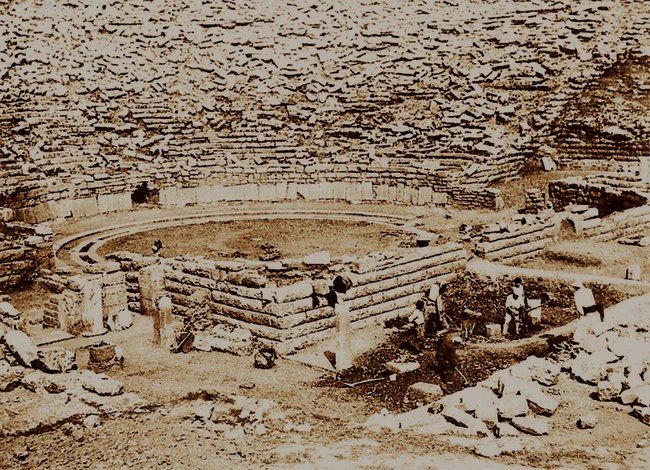
Heine wrote a fable, “Gods in Exile”. The pagan gods were dispersed by the ingress of Christianity, forced out when the sacred groves were cut down, churches were raised on the temple foundations, black robed monks replaced the priests, the oracle, chaste nuns the sibyls. The amphitheaters where they would gather and the temples where they had found offerings were empty. So the gods spread out to the colder mountains farther north and west, worked as shepherds, woodcutters, itinerant farm workers. Losing touch with each other they settled for loneliness, alien and solitary in the world they once owned. I like to think about how perhaps they are still here, in these latter days, so far from glory. That they are still there in mountain valleys where only a few odd peasants ever come by, perhaps. That when they sit down to rest, to look out over a valley to the far mountains and the snow, remembering Dodona, they hear the silence. For it is always there.

 Bas van Fraassen's Commonplace Book