Significs: the dreamer

Recently I found on my shelves a dissertation on how relativity was received in the Netherlands, and began (at long last!) to read it.  One name struck me immediately: Frederik van Eeden.  For by coincidence I had just been reading him about lucid dreams, of which he had recorded some 500 in a diary.
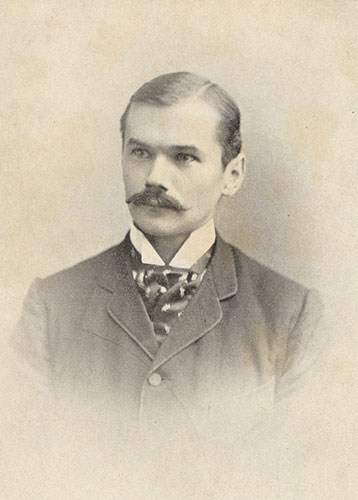
What is famous in the Netherlands may be quite unknown elsewhere.  That is probably so for van Eeden, and for his children’s book De kleine Johannes (‘The Little Johannes’), a classic to be read equally well by adults.  That I found also, for a long time unread, on my book shelves.

What any of this has to do with relativity is that van Eeden was living through a time of radical and revolutionary changes in his surrounding intellectual environment, both in physics and elsewhere, and was an active voice in those changes.  But let me go back to the beginning.

When still a young man van Eeden gained immediate fame with this children’s story.  If it were published today in America, school boards would be falling all over themselves to ban it from the libraries. It begins as a fairy-tale idyll: 

“It was warm and the pond was entirely still.  The sun, red and tired of her day’s work seemed to rest for a moment on the dunes’ edge before she went under …”

Little Johannes, dozing dreamily in a little boat on the pond, is beckoned by a blueish winged elf, and goes along.  He is taken to talk with all the small animals in the fields, and hears the cruel destructive impact by humans, obliviously or cruelly roughshod, how they are a plague and a scourge upon the earth.  As he grows up, taken along by other fairy tale characters, he comes to see the systematic cruelty of human society exercised upon the humans themselves as well. Johannes wants not to be human, does not want to join the human world, but being born human he has no choice. To live, he is told again and again, he must stunt his sensitivity, if it is to be possible to live as a human at all.  He watches with dismay his own faltering steps toward and away from that world so far and so different, so wrong and so miserable, from how his journey began.  

Only at the end of the book, for one who has witnessed all the misery and depravity in the world, redemption seems possible.
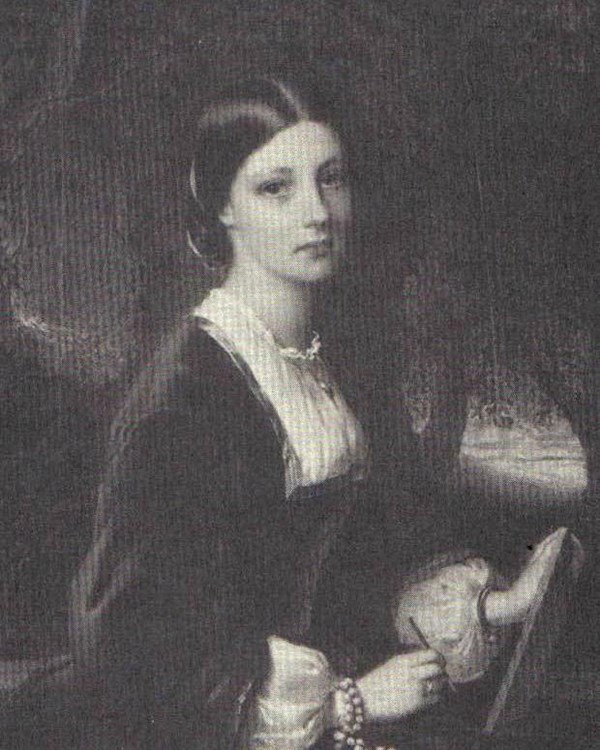
Meanwhile, in the 1890s, Lady Victoria Welby, maid of honor to Queen Victoria, invited writers, philosophers, and scientists to her salon.  A few years after De kleine Johannes she met van Eeden at the Congress of Experimental Psychology, and they were an immediate match.  This meeting began a long conversation and correspondence on her theme topic, language, meaning, and clarity.  Their cooperation founded Significs, a form of philosophy of language, which began with her 1896 essay in Mind and van Eeden’s 1897 book written in Dutch.

Philosophical discussion circles, such as those of Lady Victoria Welby’s salon,were strewn randomly all across Europe in those days. They are now mainly forgotten, except those that eventually evolved into ones we must count as our ancestors: the Vienna Circle, the Berlin Circle, and yes, believe me, the Significs Circle, which ran the still flourishing journal Synthese for its first half-century.

Van Eeden brought Lady Welby’s themes to the Netherlands, to discussions with the mathematicians Mannoury, who introduced mathematical logic there, and his (later so famous) student L. E. J. Brouwer.  These meetings, which soon involved others, started very early in the century, and remained closely connected to Brouwer’s Intuitionism.  

It was, of course, in just those early years of the century when Einstein’s relativity theory made its sudden, violent impact on our thinking.  (Hard to realize now, just how hard it hit then, when today everyone accepts it as understood and not in any way disquieting … )  There are many stories to be told about this impact, both within physics and in the wider intellectual world.  William Magie, president of the American Physical Society wrote “the abandonment of the hypothesis of an ether … is a great and serious retrograde step ….”.  It was loss of an explanation, and how can we be at peace when things remain unexplained? 

For van Eeden the intellectual impact came in conjunction with a greatly felt personal loss, the death of his son Paul.  Writing about this he reflected:

“What is the source of gloom?  … It is doubt, uncertainty.  The frightening insight in the limited reach of all our knowledge. We sense ourselves in the midst of a cosmos that is on every side too large, with means for understanding that fall short on every side.  The more we think, the more we realize the vanity of all our knowing.  The closest, most general concepts appear false, illusions, mere aids to get along, crutches for our lame understanding.  Space is an illusion, unity of time is an illusion, the simplest truths of mathematics can be altered, it is possible for a non-Euclidean geometry to exist beside the Euclidean.  The scientifically-true is intuitively-impossible, and most trusted supports for our spirit turn upon rigorous analysis into misty illusions.” 

His was not a lone voice.  While Einstein and Lorentz, the great protagonists, were good friends and respected each other’s view, and the younger Dutch physicists like Fokker patiently explained the theory’s implications and lack thereof, other writers ranged themselves in metaphysically and theologically marked heated controversies.  

Van Eeden expressed the felt sense of loss, without resistance to the great changes he was living through, yet, like Johannes, without loss of hope.

REFERENCES

(The two quotes are from van Eeden’s writings, my translations.)

Klomp, Henk A. (1997) De Relativiteitstheorie in Nederland. Epsilon.

Van Eeden, Frederik (1897) Redekunstige grondslag van verstandshouding.  Amsterdam: Versluys; reprinted 1975 Utrecht: Het Spectrum, with introduction by Bastiaan Willink. https://www.dbnl.org/titels/titel.php?id=eede003stud03

Van Eeden, Frederik  (1914) Paul’s ontwaken. Amsterdam: Versluys.  https://www.dbnl.org/tekst/eede003paul02_01/colofon.php

Welby, Lady Victoria (1896) “Sense, meaning, and interpretation”. Mind N. S. 5: 24-37, 186-202.
You Can’t Fall Off a Mountain

The only philosophical novel about climbing I ever read was Kerouac’s Dharma Bums.  The scramble up the Matterhorn in the Sierras is fabulous.  Ray, the narrator, is enthusiastic, set on going to the top, but in fact becomes more and more terrified. “This is too high!” he yells to his friend Japhy, he can’t go on.  He finds a small ledge at a level angle; shaking, he nudges his whole body into the rock to hold himself tight, and realizes he’s had it. He’s done for.

Later, as he watches his partner Japhy coming down from the summit, leaping like a mountain goat, Ray has a great insight:  “Then suddenly everything was just like jazz: it happened in one insane second or so … and in that flash I realized it’s impossible to fall off a mountain, you fool”.  Freed from his fear, he leaps, runs down, jumping from boulder to boulder after his friend.

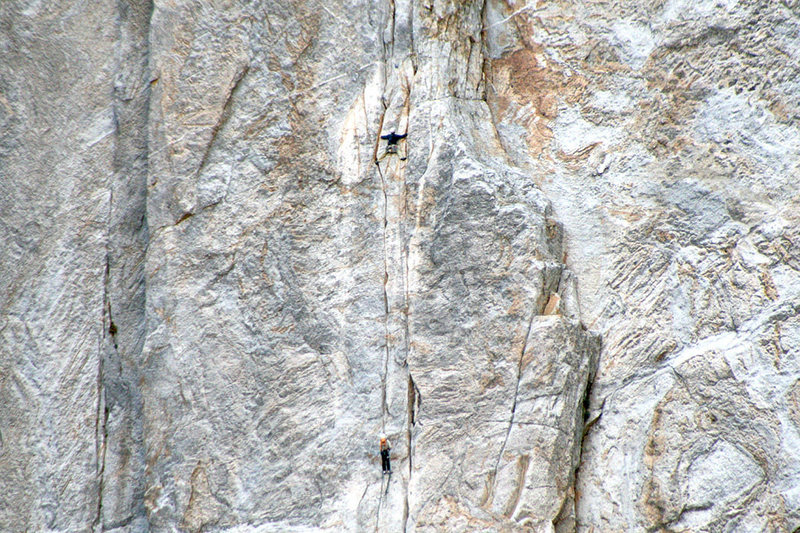
To understand this it helps to be a little high. It all makes perfect sense after a toke or two.  But  isn’t it at the same time utterly realistic?  Haven’t we all come to such moments of sheer terror? I certainly have.   There are moments in Yosemite, on Middle Cathedral, on its East Buttress and on the Central Pillar of Frenzy, that come back to me in dreams, to wake me, still afraid.  I’ll confess that to you, who know that those are moderate, safe climbs.  My fear was, after all, not warranted — but so real ….  

What then of Ray’s experience of coming out of the fear, the sudden freedom, a sense that now anything, anything is possible?  Not everyone has experienced this hopelessness in a climbing situation, and not everyone has experienced its deliverance.  Yet both can occur in any aspect of our lives, in a financial bind and no credit, in a skid on an icy road, in a relationship on the verge of breaking up — you must have your own, you, mon semblable, mon frère …. Even if in retrospect we were not in great danger at all, such situations present, I think, a perfect instance of Sartre’s view that emotions are key not only to cognitive self-hindrance, but to cognitive self-rescue as well.

When William James reflects on extreme choices, his guiding example is a climber late in the mountains, before a crevasse, with a seemingly impossible way forward and no way back.  James urges the will to believe, to believe that he can make it.  That’s all good, but James gives us no way to distinguish the climber’s leap — if he leaps! — from a purely irrational act, no better than an insanity.  Surely, clearly, we wouldn’t call it madness at all.  It is Jean-Paul Sartre who offers us a view which locates Ray’s deliverance, from this ‘no way out’ situation, as rational, even if not rational in any traditional sense.

Unlike Ray, I am an analytic philosopher.  So, in any such situation I have to list my options, and for every option its probability and possible outcomes, each with its assigned value.   Maximize expected utility! that is the rule.  

Once I have done that, I look at the rock in distress: — not a single one of these options comes with an acceptable risk. Now what?  I am stuck. My assessment cannot change unless what went into the calculation changes.  But what went into the calculation were my probabilities and values, and you simply can’t use your probabilities and values to change your probabilities and values.

How could this way of decision making overcome itself?  It can’t.  The intellectual situation is as much an unsolvable problem as my dangerous physical situation.

But something happens to solve the impossible problem.  It simply must! The factors that make for the decision situation themselves are changed.  The options have changed because what was totally unlikely now looks likely enough, or what was unbearable comes to be seen as bearable. 

Sartre identifies emotions by their function, and the main function is that of transforming a situation, from one of insurmountable difficulty, facing a decision with no acceptable options, into one where action is possible.  

It is a transformation of the world.  When the paths traced out become too difficult, or when we see no path, we can no longer live in so urgent and difficult a world.  All the ways are barred.  However, we must act”, Sartre writes, and he describes what comes to be, “a new unreflective consciousness which now perceives the world otherwise and with a new aspect, and which requires a new behavior”.  Emotion is not passivity, it is not a disturbance undergone, nor mere feeling.  Emotions involve choice and idea and purpose.  The world is transformed in our emotional experience and it is in this new, transformed world that we can act and live.

Most of the time I am sure that I have never been in danger of my life when climbing.  So, most of the time, I think of those moments of sheer terror as like emotions experienced watching a play, in a theatre.  But last year Steven Gubser died, in a 100 meter fall from L’Aiguille du Peigne, in Chamonix.  Shortly after I began climbing in Yosemite, back East where I lived, Steven became my teacher in the Gunks, leading me up fabulous routes like High Exposure and Son of Easy O.  These climbs eventually became my own favorites as well.  I wonder, but I will never know, how Steven experienced the situation that led to his fall.  But I can still see him as he looked up at the crux of Cascading Crystal Kaleidoscope, hesitating, bracing himself with the words “It’s a mind game, it’s just a mind game!”, and made himself go.  I am lifting a glass to you, Steven, and I spill a single deliberate drop, in your memory.  

Note. My friend Kimbrough Moore asked me to write a reflection, for a new climbing guide. This was it.

Lost in Pronunciation

At the Lyceum the second morning class was Latin.  We had to take turns reading out a passage and give its translation.  “Gallia est divisa … Gaul is divided into three parts” and the like. This raised a great puzzle for me.  The Romans were formidable. I had learned about them from an early age, for in the Netherlands history was taught chronologically.  (By the time we started Latin we had arrived at the 1600s.)  But there hadn’t been Romans for a long time, how could we know how Latin was pronounced?  

Miss De Kuyper, our Latin teacher, liked the question.  She liked to display her erudition, gained as a young woman studying in Germany, before the war.  Catholic priests had performed the mass in Latin, she explained, throughout history since Roman times.  In southern countries Latin was thought to have been preserved in truth, and was taught just the way the priests pronounced it.  But up here in the cold north that Latin sounded suspiciously Italian.  So 19thcentury German scholars had studied how the Romans must have spoken, and had replaced the Italianate by the Teutonic.  That was what we were taught.  Coincidentally it sounded rather like German, “Ceasar”, for example, is pronounced “Kaiser”.

This was actually easier for me than the high Netherlands that we were meant to speak in class.  In that tongue the diphthongs “eu” and “ui” sound different.  They both sound a bit like the French “eu” in “monsieur”, with subtle differences that matter much to the Hollanders.  In my dialect, Zeeuws, no such difference existed.  So I pronounce all three the same way, as Zeeuws do.

In our third year we were also given Greek, pronounced in just the same way as Latin.  Well, ancient Greeks talked with ancient Romans, didn’t they?  Saint Paul who was well educated must have been fluent in both.  Peter though … that girl in Jerusalem said Peter sounded Galilean, so he too came with a regional dialect.  I am quite heartened to think that Peter must have had some of the same difficulties as I have.

Our French teacher looked rather like Charles Aznavour, except for a neat little mustache.  He taught us to pronounce the French “p” by saying it while blowing out a lighted match.  The French “r” was much more difficult.  The Netherlands aristocracy had always spoken French, and so in the Hague, the capital, people say the “r” just like Parisians.  They do it by trilling the uvula.  I know the theory, but the practice is beyond me. This teacher consoled us by mentioning variations in the French “r” from Bretagne to Alsace: Paris is not all of France! When I met Isabelle in Paris I displayed what French I had, but she would laugh a little.  There is an Italian porn star who plays in French movies, she told me, you sound just like him.  Vainly I took it as a compliment: his French had surely to be very good …..

Then of course there is Dutch, my first language.  I can unfailingly tell, when people speak English, whether they are Dutch.  There is something that gives Dutch-ness away, in the speech (as well as, of course, other signs, like absence of tact, which they count as deceitful).  In 1979 I was at a conference in Erice, and one of the first lectures was by Roger Cooke.  A very English, or American name, but he had hardly uttered a few words before I said to myself “Dutch!”  Actually he had come to the Netherlands as a wandering jazz musician, at some time during the Vietnam war, and never left.  When I visited him in the Hague he took me sailing, and there was a special occasion when all his wife’s family came over.  The father regarded me with some amazement. “So Roger is American and sounds Dutch when he speaks English”, he said, “and you are Dutch and sound American when you speak Dutch”.  

Oh, well, what’s in a language, after all?

——– ——-

PS. Someone once took me to task for being tactless about the Dutch and tact.  I won’t take it back, but I would soften the comment for the southern provinces.

A memory of Frederick Fitch (re: Heaven)

When I came to Yale in 1966 I was the most junior of our little logic group there and Frederick Brenton Fitch was the most senior. Fitch was only one of the very unusual people I found at Yale, but he was ‘the’ logician, and I learned some very strange things from him.

Fitch was a gentleman, and a gentle man, with a deceptively understated sense of humor. He would tell us very calmly things that you’d think any logician would scream at. Our little group — Rich Thomason, Bob Stalnaker, Charles (Danny) Daniels, Bob Fogelin, Fred Fitch, and me — would meet for lunch, practically every day because Yale provided lunch free for us.

On one of the first days Fitch mentioned quietly that he was sure he would go to heaven. After all, he said, he had done something for God: he had proved his existence.

It seemed that each year he would end his seminar by proving God’s existence. On that first occasion, though, he confessed that he was still not satisfied with his proof, because by his reasoning, God turned out to be a relation.

But before I left Yale, and I asked him about it, he was satisfied. He had improved the argument and now God turned out to be a proposition. Not just any proposition, but the one true proposition that implies all true propositions — which, he said, was surely so special that it deserved to be worshipped. 

Today Fitch is especially known for his Knowability Paradox. It’s called a paradox, but he offered as just a straightforward proof, that if all truths are knowable then all truths are known. Well, that does not sound believable, but logic is like that.

Self-reference was another of his topics, and we all vied to explore its paradoxes. Danny came to lunch very excited one day, brandishing a piece of paper, saying “I’ve just proved that God is not omniscient!” On the paper he had written

This proposition is not known to be true by anyone.

Could be false? No, because If it is false, then obviously it is not known to be true by anyone. So then it would be true, for that is what it says. This means that it is not false. Fine, it is not false — therefore it is true. Being true, what it says is the case, so it is not known to be true by anyone.

Conclusion: what Danny wrote down is a true proposition that is not known by anyone, not even by God! Corollary: God is not omniscient!

“Danny, Danny”, we said, “God was listening. So now he knows!”

Well, that led to more paradoxical conclusions …. 

Fitch did not blanch at incredulous stares greeting his proof of the existence of God as a proposition, however silly that seemed … but sometimes I wonder … Fitch’s gently smiling rendition was perhaps not too unlike the secret smile we began to see everywhere in those sixties years …

——–

Note: this is a slightly revised version of what I posted in my other block on April 7, 2020 (it really seems to belong here instead)

1956

The Netherlands, robbed clean during the occupation, was still very poor.  But Canada, in need of skilled construction workers, subsidized emigration.   Barely able to cover our rent and food with his weekly wage, my father signed up.  

We were vaccinated. A large wooden container came, for our belongings and household goods.  This would travel along with us on the ocean liner Zuiderkruis, on its route from Rotterdam to Halifax.  All transport would be covered, and there would be some spending money for the journey and an initial stake on arrival.

But it was not going to be plain sailing, at the outset.  The house we rented from the municipality of Goes had had a new window installed, at my parents’ request.  Now they were told they had to pay for it, 400 guilders, about 1500 euros in today’s money.  They did not have it, and my father, grasping at straws, reached out to his older brother. 

Chris arrived on his motorcycle, strode in looking solid in his leather coat, and had a lot of advice.  “Maak je niet sappel om lauw”, he said, which meant something like “Don’t blow your cool!”  It’s all talk, ignore them.  He went off on his motorcycle and did not come back. 

Transport had been arranged, we trouped off to the train, my father carrying my youngest sister.  In Rotterdam we were directed to the customs area in the harbor.  To my surprise, to my parents’ surprise too, there was family to see us off.

My father’s sister Cora had married a German, before the war.  What had been acceptable then wasn’t later on, and they were estranged from the family during the occupation.  There wasn’t much forgiveness in the air in the years after the war.  I don’t know how long it had been since my father had seen Cora, or her husband, but there they were, at our departure.

At that moment the sword fell.  The customs officer was adamant.  There was a bill from the municipality of Goes, debts were to be paid before leaving the country.  We did not have the money.  I cannot remember much of the adults’ frantic talk.  Cora’s husband stepped in and paid the debt.  My mother cried.  Cora held my father for a moment.  They waved as we went aboard. 

A well-wisher in Goes had given me two English books, Lilian Roth’s memoir I’ll Cry Tomorrow, and the Reverent Norman Vincent Peale’s The Power of Positive Thinking.  They were my companions at sea, but they are lost now.

Force

No plan survives first contact with the enemy, Field Marshal von Moltke wrote, and the same may be true of first contact with the class you are going to teach.  

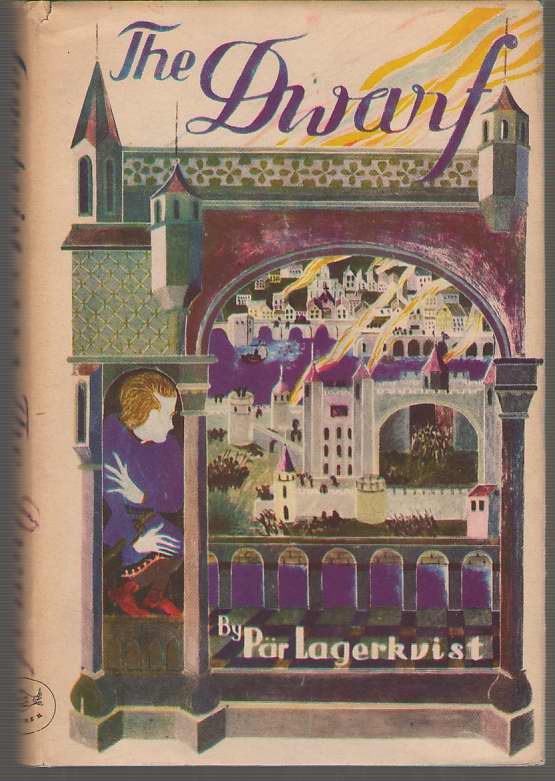
One year, designing a course on philosophy and literature and meaning to favor my own tastes, I chose tales from Borges, William Golding, Eco, Calvino, and John Barth, with links to Sartre.  We would end with Lagerkvist’s novel The Dwarf.  The narrator, Piccolino,  begins “I am twenty-six inches tall, shapely and well proportioned …”.  It is a story of evil incarnate.

That was my plan.

 As I stepped into the class there was in the front row, gazing at me earnestly, a young woman of very short stature, not much greater than Piccolino’s.  

Many thoughts and feelings struck me simultaneously, the first being shame, not having thought of how abstractions and fictions may come to have a face, the second that my lecture notes on The Dwarf needed tearing up.

Unlike Field Marshal Moltke’s officers, I was allowed time to redesign the plan of battle between first contact and crucial engagement.  

Overcoming the myopia I had shared with Lagerkvist’s reviewers, I chose as theme the problem of freedom.  Not the traditional chestnut of free will versus determinism.  That, in its abstraction, becomes just another “what happens when the irresistible force meets the immovable object” puzzle.   

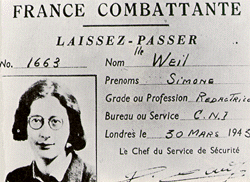
Rather, the problem as posed in Simone Weil’s meditation on the Iliad, Le Poème de la Force. As the Iliad’s heroes, Greeks and Trojans both, act on their anger and lust of violence, the idea of their honor and revenge, are they paradigmatically free actors? Or, being gripped by emotion are they no more free than leaves blown off a tree, fluttering to the ground?   
In Borges’ The South, Juan Dahlman’s life is affected by a scratch, septicemia brings him helplessly into the hands of doctors, he comes close to dying.  On release he sets out for his ranch in the South.  At the station there, having something to eat, some country louts provoke him, he protests, they respond with insults.  An old gaucho casually tosses him a knife, without thinking he picks it up. “Dahlman bent over to pick up the dagger, and felt two things.  The first, that this almost instinctive act bound him to fight.  The second, that the weapon, in his hand, was no defense at all, but would merely serve to justify his murder.”  

There is no way out … he steps out, clutching the knife, which he does not know how to wield.  

Golding’s Free Fall is one long attempt to answer the question “When did I lose my freedom?”  Sammy Mountjoy reflects that once, he was free.  As a child in a slum, as a little boy, he was free, the taste of freedom undefinable, like the taste of potatoes.  But already as a young man he was not free anymore, “almost”, he reflects, “but not quite”. For then he had no focus but Beatrice, had been taken over by a desire that he could perhaps have set aside but it was already too late.  And the desire is ruthless: “Once a human being has lost freedom there is no end to the coils of cruelty.  I must, I must, I must. … We can only watch ourselves becoming automata; feel only terror as our alienated arms lift the instrument of their passion towards those we love.”  

In conjunction with fate and circumstance, we enslave ourselves. Or, more accurately – given how ephemeral the experience of freedom seems to be – find ourselves enslaved.  It is one of the many ways Simone Weil describes of how force turns a person, hero and victim equally, as she says, into a thing. 

During the course the young woman – I will only refer to her thus — would not talk often or much.  She wrote the assignments in a very personal, often heartfelt, way.  I felt apprehensive as we began our sessions on The Dwarf.

What is Piccolino?  He is a slave, his mother sold him.  He is an object, a piece of property bought and sold, used.  He is given as a plaything to the child Angelica, and as an object of scientific study to Bernardo, and he feels it deeply, “inside I am raging with fury”.  He struggles to define himself in face of the facts of his situation,  
“No one possesses himself!  Thus everything belongs to the others!  Don’t we even own our own faces?  … Can others own one’s own body?  I find the notion most repellent.

I, and I alone, will be the possessor of that which is mine.  Nobody else may seize it, none outrage it.  It belongs to me and nobody else”

There is no question that Piccolino’s life instantiates an unredeemed evil.  He is, in his own self-image, the Satan outside paradise: “Evil, be thou my good!”  Piccolino carries out what he takes to be the Prince’s wishes, but finds ways to go much further, murdering defenseless other dwarfs and bringing about enormous, fatal cruelty for both Angelica and the Princess. In doing so he plays the role he has constructed for himself, through denial and self-deception, as the Prince’s shadow, “his little assassin, his little bravo”.  He is not being used, demeaned, in this role, he is heroic, he is indispensable.  He has a reality, behind the appearances, “Who can guess my true identity?  It is well for them that they cannot, for if they did they would be terrified.” But what he is in fact keeps breaking through his unreliable narrative. He lives in a reality beset with contradictions.

Piccolino cannot escape what makes him someone’s property, but neither can he escape the role that alone can allow him to bear that. Where is his freedom?  

That young woman  who was there in the front row, gazing at me so earnestly, chose to write on The Dwarf for her final essay   At the end of her paper there was a handwritten note, “This was very hard for me”.

NOTES

 Simone Weil’s, L’Iliade ou le poème de la force, written early in the war, begins “The true hero, the true subject, the center of the Iliad, is force. Force that is managed by man, force that enslaves man, force before which man’s flesh flinches. A human soul appears always modified by its relations with force, as swept away, blinded, by the very force it believed itself able to handle, bent by the force that constrains it.”  (my tr.)  Les Cahiers du Sud 1940/41.

Reviewers on The Dwarf

Kirkus Review: “Embodying the malevolence of maladjustment, the evil genius of thwarted ambition, a dwarf, of renaissance Italy, tells his story. Hating normal people, contemptuous of his Princess, losing his faith in his Prince, the warped little man gets his taste of power in a war waged against a neighboring principality, poisons the enemy as they treat for truce. On his own, he poisons his Princess’ lover, betrays her young daughter and the boy she loves, and brings about the death of the Princess as she strives for pardon. Told in the first person, there is the hysterical self-justification, uncontrolled resentment, implacable anger of a frustrated ego ….” 

Milosz Puczydlowski:  “The novel’s protagonist is to be found as the embodiment of evil.” (Abstract) and “Although the Dwarf always stands behind the ruler’s acts and decisions, the influential role he plays in the novel’s plot is not obvious to the others. Yet, it goes without saying that he is the true embodiment of evil that lurks in the murky abyss of the Prince’s soul. All the calamities that afflict both the castle and the entire country have their source in the Dwarf’s deeds and speech. […]  By going deep into the Dwarf’s values and motivations one can find the genuine identity of evil.” (p. 86).  “The Ontology of Evil and Its Anthropological Moment of Freedom in Pär Lagerkvist’s The Dwarf and Plotinus’ Enneads (I.VII-VIII)” The Polish Journal of Aesthetics 56 (2020): 85-99. 

Slipping in and out of music

Still hazy, jetlagged, I listened to Danny’s proposal, made somewhat dramatically, that we should all go have brunch next morning at Wijnand Fockink.  I wasn’t sure what I heard, but didn’t bother, Dutch was mostly unintelligible in his mouth, despite much practice.  Things became clear enough the next day.

Having overslept, after only a coffee for breakfast, the brunch looked a bit daunting.  Coarse dark bread and a rough Algerian wine accompanied a cheese palette, arranged from mild through hard and egregiously aged to sweet at the end. Softly played French songs, rather sentimental, Edith Piaf old favorites, Mireille Mathieu young but not so different, filled the background. As we moved slowly through this spectrum of cheeses, the tastes rendered distinct with the wine’s help, I found life looking rosier and rosier.  Stepping outside the illusion remained intact, the streets shone, the trees blossomed just for me, there were stars sparkling in the water.  

Those were the days early in our acquaintance (we had started our first ‘real’ jobs together) when Danny would spend each summer in Amsterdam. In New Haven he had made himself just as quickly at home as anywhere; sometimes I hung on his coat tails going to a party or play. 

When some years later I was talking with Danny in Montreal, I reminded him of the musical French background to that brunch in Amsterdam. His friend Bram, who had been sitting next to me at the time, had commented on Piaf.  “Chagrins, plaisirs … not to regret at all?  What of the chagrin des plaisirs, so much more difficult to overcome?” Since then Dannyhad begun to spend his summers in Montreal.  He had resolutely turned his back on Amsterdam summers, not to mention Dutch pronunciation, and was practicing French.  

I had come prepared, and offered him some Edith Piaf lyrics, for practice – thinking that he could simultaneously listen to her easily obtainable records.  The Parisian R is too ambitious, I told him, maybe you can mimic it with the Dutch G or the Scottish CH?  Are you calling the kettle black? he asked me, and I hung my head in shame.  Since he was about to give a philosophy talk at UQAM, he was practicing Bertrand Russell’s examples in French.  “Le roi de France est chauve” he liked especially, being bald himself, which he attributed to his having once, in an emergency, washed his hair with laundry detergent. That evening after wine and cheese for supper, Danny took me to a jazz club. Everyone there knew him. 

Though Danny and his father were irredeemably mid-western, Danny’s sister,  living in New York, had become native there.  Since I was living nearby Danny would call me when he came to visit her, and we would go listen to jazz.  Once he called to ask me along to the Village Vanguard where he said Dorothy Donegan was playing the piano.  Then he added, can you come by car this time? Then we can pick her up at her hotel and give her a ride to the village.  I hadn’t heard about her, what …? Oh, he said, she isn’t so young any more, let’s make it comfortable.  

She was a bit late. In the lobby we talked with the pianist, who was writing a self-help book for people addicted to coffee. When she entered Dorothy Donegan did not look, at first sight, like she needed comforting, rather like someone I’d turn to for comfort.  Then when she grinned at me, mischievously, I thought perhaps she would not be so comforting after all.  At the Vanguard she started slowly, a sort of jazz lullaby, but that was a truly deceptive beginning.  By the end it felt like we had come through a storm, she had turned wild, at one point climbing on the piano stool, I swear I saw her kicking the keys with her foot.  
Different friends bring different styles in music – so with Ernie, who lived in the Village, there was Marshall Chapman at the Lone Star, a rather complicated series of things with Phoebe Legere and her pick-up band The Female Troubles, and the so appositely named Helen Wheels at CB/GB.  But on my own I would return to the jazz bars, alone unless  Danny was visiting.  There were fewer such occasions as time went by.  In Montreal Danny met ZhenHua, a very straight talking engineering student from China.  Instead of returning there, she married Danny.  Though rapidly assimilating, there were links to her time as a Red Guard. Not only a photo brandishing a Kalashnikoff but, more tellingly in the long run, a certain absoluteness in moral judgment.  Woody Allen’s “Crimes and Misdemeanors”, where the guilty live contentedly ever after, left her outraged.

I saw much less of Danny after the eighties.  Early in 2013 we spoke on the telephone, Danny, it seemed, wanted to reminisce, to talk about our days in New York.  I seemed to remember more than he, or at least, was less confused; some of our discussion left me puzzled.  Then some months later ZhenHua called me, and in her straightforward way said, “Bas, Danny is dead.  He found out he had Parkinsons.”

———————————————

Notes.  Later, in 1991, the New Yorker Magazine ran a piece about Dorothy Donegan.  It was called “Wonder Woman” and began with “At the age of sixty-eight, Dorothy Donegan is on the verge.  She is a virtuoso pianist, an electric performer, and a transcendent clown, and she has been doing what she does for fifty years without – until the past year or so – much effect.”  She died In 1998.

Phoebe Legere was at that time unknown outside the Lower East Side, willing to play at parties.  Punk legend Helen Wheels, whom Ernie tried to hire for another party, died in 2015. The photo with the Kalashnikoff is on the cover of ZhenHua’s book Red Flower of China

A gentle, lucid spirit …

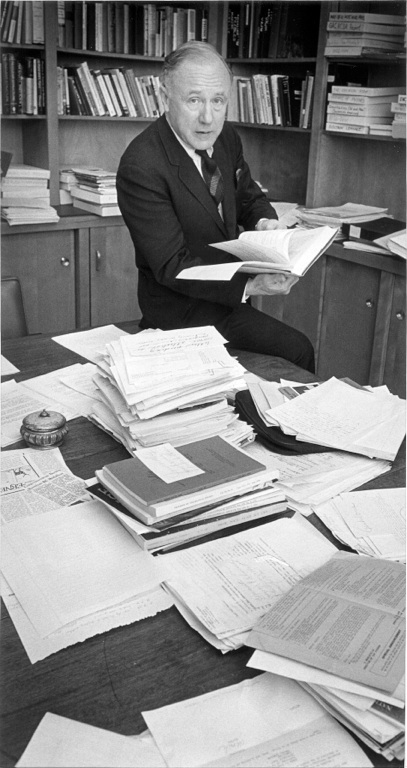
John Archibald Wheeler was loved and adored throughout physics — especially, naturally, in Princeton.  After Wheeler retired he spent ten years in Texas, but returned to Princeton in 1986, and the university welcomed him back to his old office.  From time to time his secretary would call and ask me — like others of his more junior colleagues — to join him for lunch.  

But I knew him well before then,  because Wheeler acknowledged no division at all between physics and philosophy.  

In the early seventies, the University of Western Ontario was the primus locus of philosophy of science in Canada.  All the universities were expanding, one projection said that within ten years California alone would absorb the total output of Ph.Ds.  With the exuberance of new funding UWO drew philosophers, scientists, and mathematicians to a fantastic series of colloquia and conferences.  

So Wheeler came there in 1970 to Cliff Hooker’s conference on foundations of quantum mechanics.  Wheeler’s colleague Eugene Wigner spoke, Wheeler did not.  But Wheeler sat quietly taking many, many notes, in all the sessions, and wanted to talk and listen over lunches and coffee breaks.  At one lunch, at another table, Cliff mentioned something Wheeler had said, and a neighbor, I think a physicist, turned to us and said those words, “A gentle, lucid spirit …”.

Wheeler’s lectures astonished, inspired, exhorted … I wondered often just how indulgent an audience could be.  But then soon I’d see his new slogans repeated in the literature.  The participatory universeit from bit, the world as a self-excited circuit, displayed in provocative images that quickly became famous

The universe creating itself through observation
John Bell parodied Wheeler’s style (the negative-extravagant,  “No analysis moved our understanding forward more than …”, “No other experience could …”) but did so affectionately — who wouldn’t love the master in those moments?  

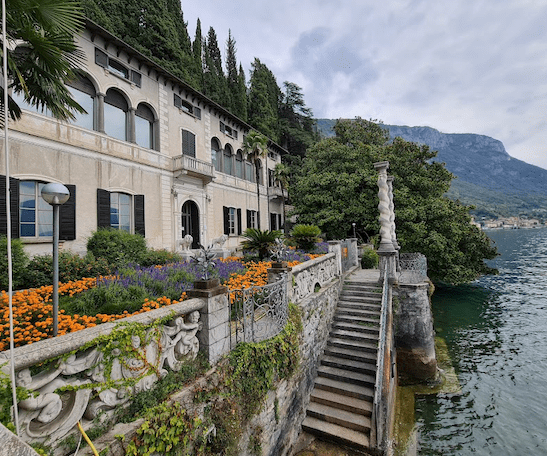
In the summer of 1977 Giuliano Toraldo di Francia organized the annual Enrico Fermi physics course in Varenna, on Lake Como. Jeff Bub, Marisa Dalla Chiara, and I were the only philosophers, properly daunted by the physics company: Jean-Marc Levy-Leblond, Ilya Prigogine (Nobel prize that year) , John Archibald Wheeler ….   The course was held in an imposing venue, the Villa Monastero, angels and saints on lecture room ceilings, strolls by lake-side ….  

When we arrived, gaping at this splendor, I exclaimed to Marisa ‘When I grow up I want to be Giuliano!’

I almost lost Wheeler’s favor, later on, and it was because of a story in his lecture there in Varenna.  The background to have in mind is that Wheeler had been involved in the WWII Manhattan project.  In those seventies’ peace march days, he had become a little wary about this.  In one conversation I came across him pointing out how many soldiers’ lives had been saved by bombing Hiroshima.  Evoked by someone’s ill-timed remark, I imagine.

Well, in that lecture in Varenna Wheeler told a story (one he would repeat often) to  illustrate the participatory universe, which creates itself in response to our questions.  Roughly it went like this:

“We had  been playing the familiar game of twenty questions. Then my turn came, to be sent from the room, so the others could agree on a difficult word.  When I was finally readmitted, I found  a smile on everyone’s face — what was going on?. I nevertheless started my attempt to find the  word. “Is it animal?” “No.” “Is it mineral?” “Yes.” “Is it green?” “No.” “Is it white?”  “Yes.” These answers came quickly. Then the questions began to take longer in the answering. It  was strange, the one queried would think  and think, yes or no, no or yes, before responding. Finally I had only my twentieth question left.  I guessed:  “Is it cloud?” “Yes,” came the reply, and everyone burst out laughing. They explained to me  there had been no pre-arranged word.  Each one questioned  could answer as he pleased — except only that he should have a word in mind compatible  with all that had gone before.”  

Is that what happens in nature when physics puts nature to the question?

Inspired by this in my own way, I wrote a story.  The archangels Michael and Lucifer play with the course of nature, in response to scientists’ questions.  Lucifer, female in that story, has her hidden designs; the story ends with “And in her mind’s eye she saw already, in the far future, in answer to a human question, little pieces of star burning fiercely, briefly on earth; first in the desert, then in a city”. 

I gave Wheeler a copy at the Weyl conference in Kiel, a few years later.  The next day he gave me a distinctly suspicious look.  I made some disarming remarks, and he called the story “interesting” (hmm …). But then we were talking about Everett and the many worlds view (“what could get people more confused about quantum mechanics?”, he said), and we were fine.  I suppose he gave me the benefit of the doubt.

————————————–

Notes. Wheeler’s 1977 lecture “Frontiers of Time” is online (not a very good copy), and there is a fond reminiscence of Wheeler in the Princeton alumni magazine (scroll down half-way). And there is my story.

Memorie dal Silenzio

On any army base, in the evening, the flag is lowered and the trumpet sounds Retreat.  In the Italian army, the moment of lowering the flag is called il silenzio.  Nini Rosso chose the name when he composed the trumpet solo now so very well known, Il Silenzio.  I play a version when I drive my car down California highways, but wish I had downloaded the performance I love most, by Melissa Venema.  

When I listen to the sound I think about silence.

The subject is silence, but all I can say about it is about sound.  Once or twice in my life I have heard the silence.  Trying to explain this to someone, once, I faced only a blank look, a not understanding.  The world is a great silence, I said, the sounds are accidents happening in it, like rocks strewn in a sandy plain, or blobs of paint thrown on a blank canvas from afar.  Normally I only perceive those sounds, those fleeting disturbances,  there are too many for me. They come and go but they leave everything the same after all.

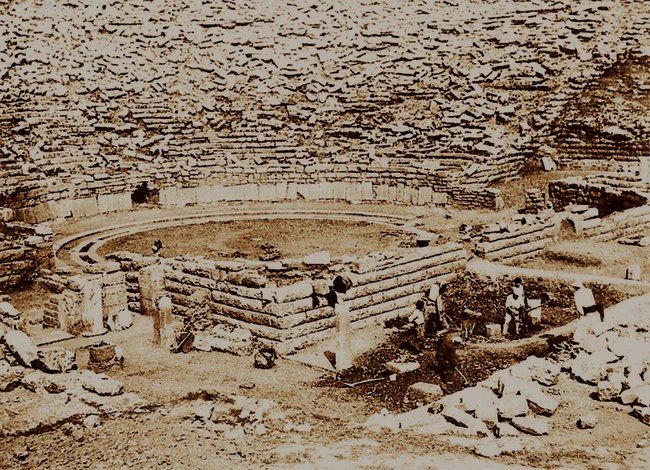
One April, in Greece, traveling from Thessaloniki across the plain of Meteora, I came to Dodona.  Homer called it ‘wintry Dodona’ and the snow was still on the mountains, but the great amphitheater was bare.  I climbed up through the rows of stone seats, the others there were far below.  It was very quiet, a goat bell tinkled across the valley. I stood still, looking across the valley to the mountains and the snow.  For a moment, I heard the silence.  There was a shift, like in an optical illusion, that suddenly shows the other reality.  I could not hold on to this moment, the sound of my own breathing broke the spell.  I was back in the familiar world where there is only sound and no silence.

Heine wrote a fable, “Gods in Exile”.   The pagan gods were dispersed by the ingress of Christianity, forced out when the sacred groves were cut down, churches were raised on the temple foundations, black robed monks replaced the priests, the oracle, chaste nuns the sibyls.  The amphitheaters where they would gather and the temples where they had found offerings  were empty.  So the gods spread out to the colder mountains farther north and west, worked as shepherds, woodcutters, itinerant farm workers.  Losing touch with each other they settled for loneliness, alien and solitary in the world they once owned.  I like to think about how perhaps they are still here, in these latter days, so far from glory.  That they are still there in mountain valleys where only a few odd peasants ever come by, perhaps.  That when they sit down to rest, to look out over a valley to the far mountains and the snow, remembering Dodona, they hear the silence.  For it is always there.

When I was nine

When I was nine I had my second tonsillectomy. I remembered the first one well, I had been seven. That had been a poor job. I was an outpatient, just brought in for the job, they must have given me to an intern to practice on. He was nervous, didn’t cut the thing clean off, so he pulled a bit harder instead. Something like that.

So, here I was again. Sitting in the white bed I couldn’t believe, couldn’t understand, that what was going to happen had to happen, that I had no choice, it was going to happen anyway. I could run, sure, I could see the garden outside, the French windows were open. The sun was shining. I could run out in my pajamas, and they would probably catch me eventually, or I’d get home, and my father would bring me back. But wouldn’t the running make them think twice? Before doing this to me again?

Yesterday I was still free, riding my bicycle. I thought about running away after supper, hiding in one of the orchards there, taking the breadknife with me to fight off my father if he came after me. But this morning I was still home, I was docile, I came with him, he registered me, he handed me over.

Two nurses came in and put me on a stretcher, took me to the operating room. One placed a shade with chloroform over my face. Start counting, she said. Breathe deep. I hissed through my teeth, I didn’t breathe deep. I was crying, and hissing too. Start counting! she said, shaking me. I counted out loud. ‘He isn’t going under’. ‘Just keep him down’. Then I was tired and I gave up. I breathed in, I breathed in great gulps. I wanted to sink under. Now my crying was a hindrance, I breathed as deeply as I could.

That was a Roman Catholic hospital, this second time, all the nurses were nuns. They were very nice, or at least the young ones were. Except that one became very angry, when she caught me looking as she helped an invalid boy to pee in a bottle. She straightened his legs, put the bottle between them, gently put his penis inside the neck of the bottle. She was a very pretty young nun. She looked up and looked terribly angry when she saw me staring, she quickly covered the boy. Did she think I wanted to see the boy’s private parts, or wanted to watch her handling them? Well, I did, I had, both, I was overcome with the shame, I could not meet her eyes any more.

I remembered all this when I was in the hospital for my third surgery, just this past summer. This one I had freely chosen, I did not want to run away. But my imagination brought back the felt sensation, that overwhelming, powerless wanting to escape.