Rock Mass in Adelaide

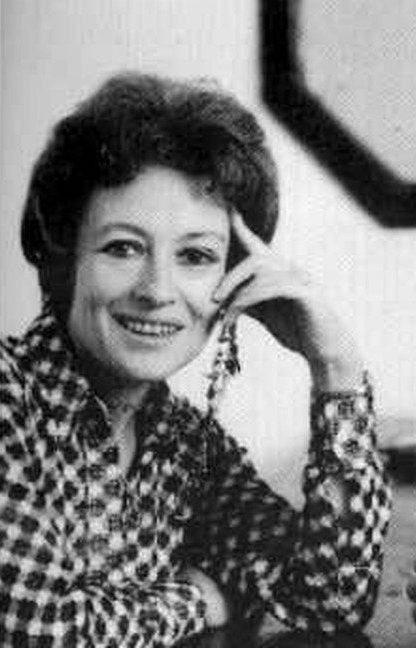
Sister Janet Mead died yesterday.  

I saw it in the Guardian newspaper, just as millions of others must have seen it there.  At one time I had her record.  This was when I still had a turntable, well, a Hi-Fi with a turntable, I don’t think that even then we would have called it a gramophone.  Playing it I would sing along with her rock version of the Lord’s Prayer.  I could still!   I hear it vividly yet, I am singing it now as I type, but it doesn’t sound like her.

In 1974 I spent the summer in Adelaide.  This was far from home, long distance telephone was too expensive for me, letters would not have their answers from abroad in less than two weeks.  Sitting in my dorm room, in the middle of this small, compact, geometrically constructed old city an unexpected, to me inexplicable, loneliness bit through everything around me. Loneliness mauled the world as a crated dog would if left alone and slowly gone insane.   

This lasted some days and then, with no more warning than when it began, when I walked out into a new morning, it had given way to a strange euphoria.  I could not understand what was happening to me, but could hardly stop to wonder, the grass, the buildings, everything was covered by sunshine, and so it was for some days.  This too gave way, by small inevitable steps the euphoria traded itself in for everyday happiness.  Once a week I gave a seminar, I met in department for its daily tea break, I made friends, the town was good to explore.

Quite early on someone told me about the rock music in the Cathedral, at the weekly Saturday vigil mass.  Sister Janet Mead and her rock band, young people with long hair,  performed the entire liturgy, with the priest present only for what only priests could do. It was amazing, I thought that she could like Saint Francis have transformed the entire Church, in this decade after John XXIII turned the altars around.  But that too gave way, by small inevitable steps, to a more ordinary happiness.  

Looking back I never tried to explain to myself what had happened that summer.  Sometimes gold and diamonds have come pouring into my hands, not knowing what to do with them, they flowed through my fingers.  A treasure remains, the image of how it was. 

Sister Janet was a very ordinary saint and a very unusual person.  I can only wonder what she was to herself, what we can know about others at all.   

Harvard Stars

In analytic philosophy, in my generation, it seemed that every philosophy child learned two names at her mother’s knee: Willard Van Orman Quine and Hilary Putnam.  In the way myths grow in the absence of history, Quine was the Creator of naturalism and Putnam the Destroyer of the fact-value distinction, and they lived on Harvard Square.  

My first philosophy teacher, Karel Lambert, introduced me to Quine’s essay ‘On What There Is”, and I have introduced all my graduate students, in every cohort since, to it as well. Then Lambert taught a course with Quine’s Word and Object as text, and after that I had an independent study course on Quine’s Mathematical Logic, including its prototype-syntax … I was brought up, you might say, as a Quine fan.

Quine was the older of the two, his life spanned all but eight years of the twentieth century.  As a young man he went to study with Carnap in Prague, just before the Nazi’s forced logical positivism’s diaspora.  As Ayer did to England, Quine carried the positivist evangel to America.  I first saw and heard him shortly after my graduation, in the sixties, at Yale.  During the discussion period  I asked a question, no doubt still sounding like an uppity student.  The question I do not remember, but I can still see it all quite vividly.  Quine paused, looked at me suspiciously, paused a bit more, then made a single kindly comment.  

I never knew Quine personally, but in some ways he was never far.  Stephanie Lewis’ husband had been one of Quine’s students,  She thought and talked very warmly about him, though she called him Willard Van Orman Grape, referring to what was — to all appearances, if not in reality —  his drinker’s nose.  Quine had a special game he liked to play, she told me:  give him any longitude and latitude coordinates and he would list cities nearby, if any.  He liked to play this for a long, long time.   

To me Quine, whom I idolized when I was an undergraduate, was always an enigmatic figure.  In the eighties his autobiography appeared, The Time of My Life.  It did not illuminate the enigma. Written like Homer’s Odyssey: wanderings throughout the known world, no inner life.

In this respect Putnam was very different, and I developed a great liking for him.  We met at many conferences.  Again the first occasion was just shortly after I graduated.  In 1968 the Philosophy of Science Association had its first meeting and we were together in a symposium on quantum logic.  In one respect this was like my first meeting with Quine.  I raised an objection and was dismissed with a single, unexpected, awfully clever riposte.  But we continued to meet and debate, in such places as Urbana, Montreal, Florence, Taxco, Thessalonica, Los Angeles.  Each year I admired him more.  He was not easy to debate, for Putnam was well known for how he would criticize his own positions and change his views.  “I am a moving target!” he would say.  Still one could see the underlying continuity. Even when he was going in and out of his Marxist period:  Marxist philosophy of mathematics, as he presented it in a lecture in Toronto, turned out to be so very like Putnam’s earlier philosophy of mathematics.

In 1990 we had a great celebration for Quine in San Marino, “for the world’s greatest philosopher in the world’s oldest and smallertrepublic” Umberto Eco said.  It was indeed a feast, a whole lamb (or was it a suckling pig?) was roasted at the reception in a medieval hall.  Besides worshippers from afar such as me, there were also the real disciples. George Boolos stood out.  One of Quine’s notable insights had to do with quotation, and the famous use/mention distinction, by which he would expose even ambiguities in mathematical language.  Boolos’ very technical lecture, “Operational Ambiguity” had as focus the difficulties with 

            ‘blue’ appended to the quotation of ‘red’ = ‘ ‘red’ blue’

and ended with some very long expressions that turned out to denote themselves.  A young man with a German accent accused Boolos of having presented a parody of Quine’s philosophy.  Perhaps this was disingenuous.  A few people laughed. Boolos was angry.

As for me, I was not at ease on this occasion.  Quine’s little last book, The Pursuit of Truth, had just appeared, and I had just submitted a negative, I am not sure it was uncharitable, review to the TLS.  We didn’t talk.

Death and the Maiden

A crowd flowed over London Bridge, so many,
I had not thought death had undone so many.

T. S. Eliot, The Waste Land

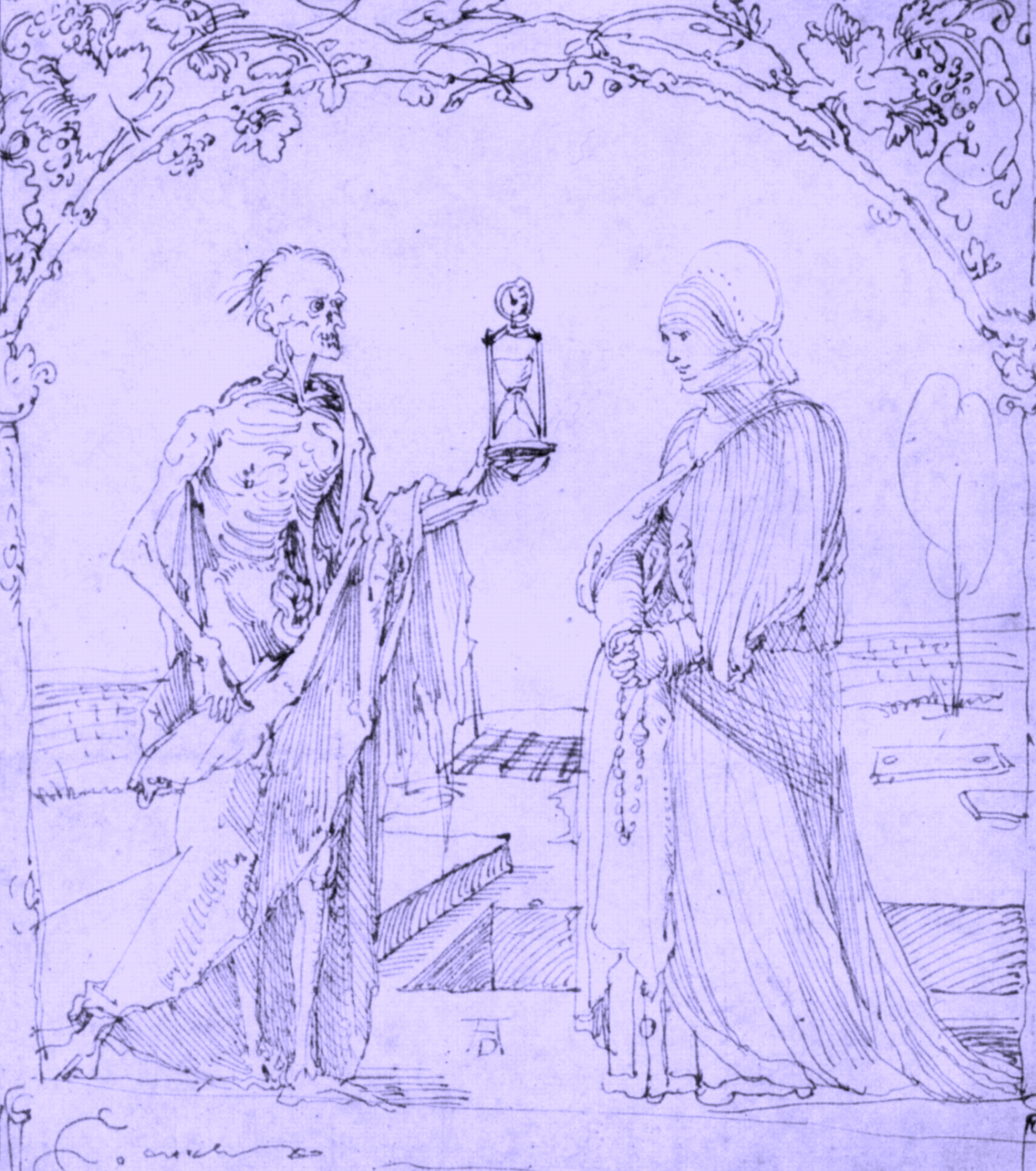
Images of a maiden caught or confronted or taken unaware by death, depicted as a skeleton, seem to have been everywhere in the Renaissance.  All purport to remind us that beauty and youth are fleeting, that death awaits us and comes unbidden, at no predictable time.  And all purport to place us in that half resigned, half regretful mood of Horace’s  “Eheu fugaces, Postume, Postume /labuntur anni — Alas, Postumus, Postumus, how the years go fleeting by …”

Talking about this with my long time friend Ron Giere, aware how this applied to us, he said rather heavily “I know a lot of dead people now.  Starting with my parents …”  Then he added names of philosophers we had both known, including Tamara, who had not seen the years fleet by.

Tamara.  I enjoyed her arguments, I enjoyed being her friend and friendly adversary. 


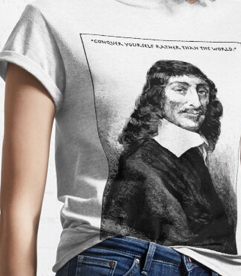
On one occasion she met me wearing a T-shirt with a picture of Descartes on the front.  Flirting a little, I pointed roughly in her direction and said:

That is a philosopher!

and I asked “What I said is clearly true.  But what is the true thing that I said?”

She laughed a little, but more, I think, to show pleasure than at the puzzle.  Then soon she was telling me that she had been assaulted and raped, some time during the past year.  Now, she said, I have a .357 Magnum, it was the only thing to help me trying to get over it.  I go to the range, and every target I hit is the man who assaulted me.  “If I saw him again I would kill him, joyfully, happily, with delight”.

It was some years after that, after I had not seen her in a while, at a conference thousands of miles away from there, that I heard she had died.

It was unexpected. I was surprised at how much of a shock it was.  I went down to the bar, to have a drink.  To her memory? As if we could not escape a ritual ….  If she had not died would I have seen her at this conference?  In a sudden image there she was, coming into the bar, with her little lopsided grin, walking towards me.  The taste of the whisky turned grief into a fitting melancholy; slyly seeping in, it transmuted a little lead into gold. Beyond the bar’s windows the desert stretched out toward infinity.

We are meat, we are spirit
We have blood and we have grace
We have a will and we have muscle
A soul and a face
Why must we die?

We are human, we are angel
We have feet and wish for wings
We are carbon, we are ether
We are saints, we are kings
Why must we die?
Why must we die?

We are men of constant sorrow
We’ll have trouble all our days
We never found our El Dorado …

(Kate & Anna McGarrigle, Matapedia)

Now we are many years later yet, and I try to be an empiricist.  I have no metaphysics to order this life so that everything happens by necessity or probability, as Aristotle requires of a well-written tragedy.  No, there is no necessity, it’s just one damn thing after another — or just one blessed thing after another … And yet, there is the overwhelming reality of death.

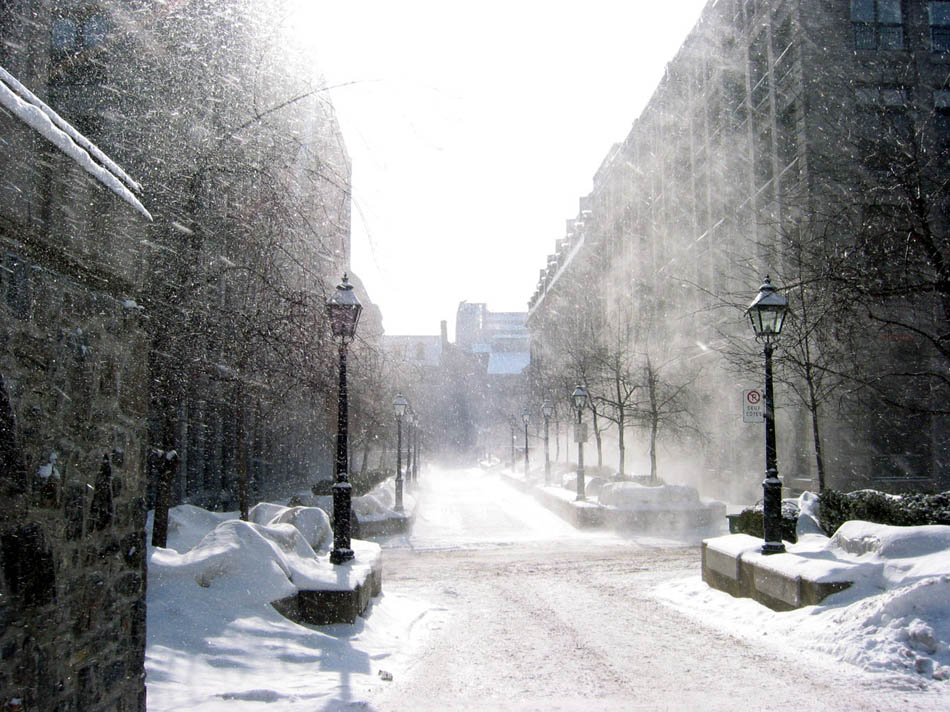
Once upon a time I lived in Canada, not in the far north of Canada as Canadians know it, but still far north.  In the autumn the saskatoons would ripen, the purple asters and black-eyed Susans bloom, but there, just beyond this time, the winter would be coming on like a juggernaut.  The fifty-below freeze that broke the engine block in my car, the snow storms that would empty the road of all traffic, the squirrel found frozen dead in the street.  The coming winter was acknowledged, it was accepted.  But there was more to it than acceptance.  As Paul Cortois argues for friendship and for enmity or hate, all the great concepts whereby we locate ourselves in this life, some sort of love is involved.  

A little love goes a long way.

I do not rage against the dying of the light ….  

I get out my Kodak boots and warmest parka, look for the long-johns that I tossed into the laundry an eternity ago. 

When the storm has passed, you will lift a glass.       The taste of the whisky will turn grief into a fitting melancholy …..

The Gentle Art of Parody

…. and its failures

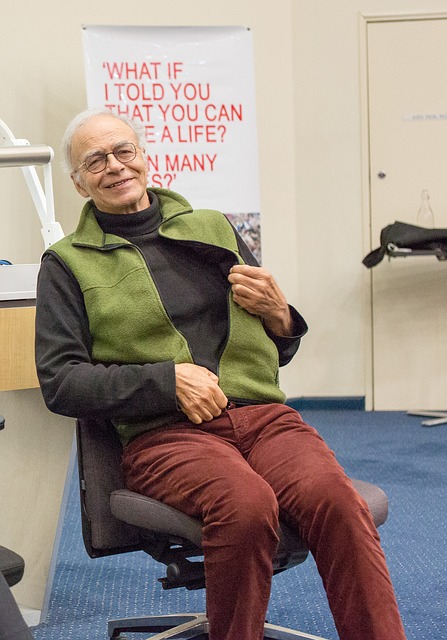
Peter Singer is much to be admired, for all the good he has done for animal rights and welfare.  But he encountered much hostility, not for his naïve utilitarianism (let’s draw a veil, shall we?) but for his reasons for not eating animals. Some of the criticism in the German-speaking countries tended toward violence, even near riots in Austria.  This was before the flowering of social media, but the internet was already spreading abuse of all sorts.  Soon after Singer came to Princeton I came upon something on the web, an article ostensibly praising bestiality, advocating sex with animals, purporting to be by Peter Singer. and posted under his name.

Later that day, meeting my colleague Beatrice Longuenesse, a good friend of Singer’s, I expressed my dismay. “Criticism is all very well”, I said, “but to actually go so far as to publish a parody of his views, under his own name, that is outrageous”.  She looked at me, startled, and then looked suddenly quite angry — that was not a parody! it was his, what was I thinking of, what did I mean? What was I trying to say?

I was startled in turn … embarrassed at my faux pas.  Parody, when it succeeds, is admirable as a literary tour de force, but perhaps it goes wrong all too often.  (As it did, on this occasion, in the opposite way so to speak, by my taking something as parody that wasn’t.)  

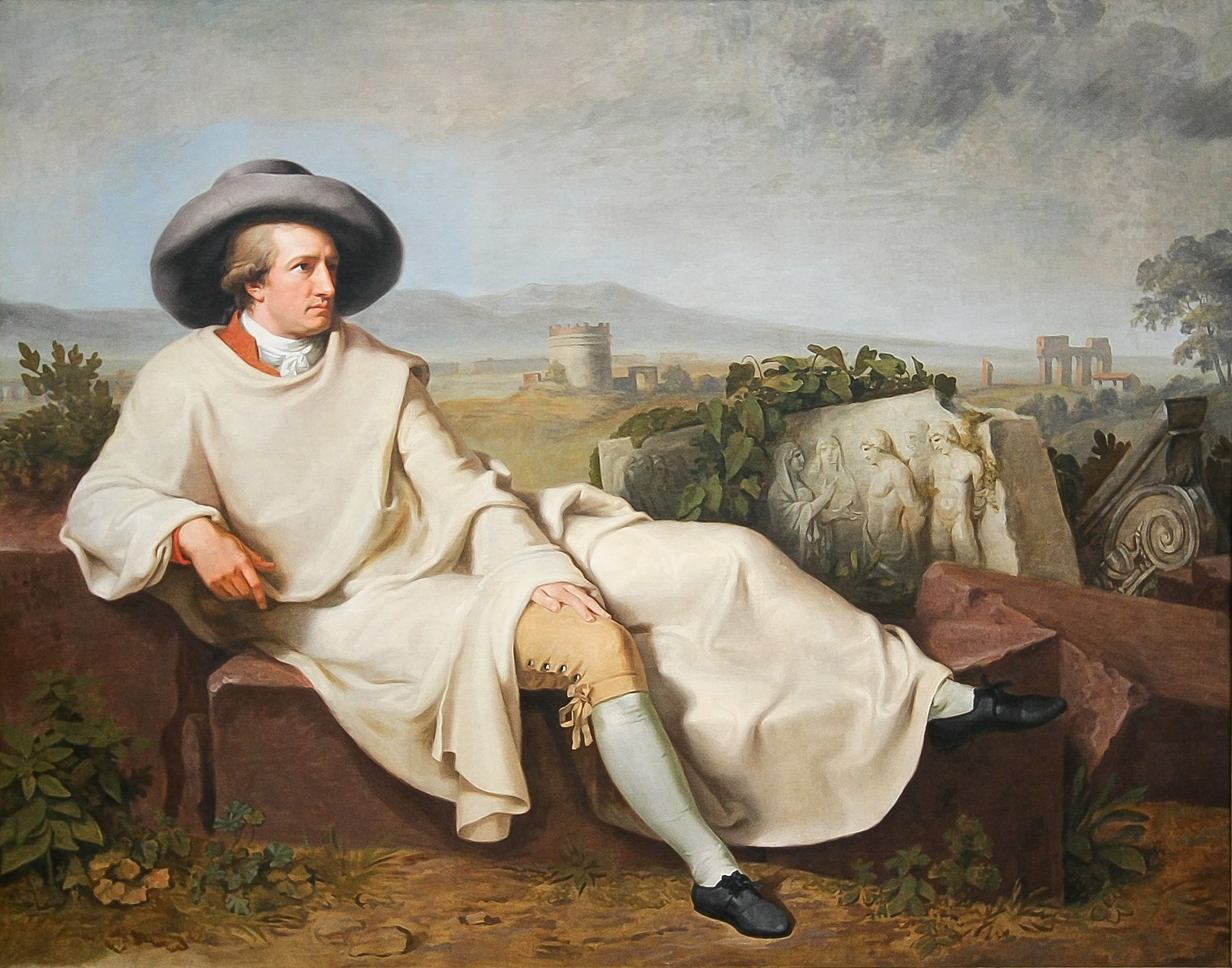
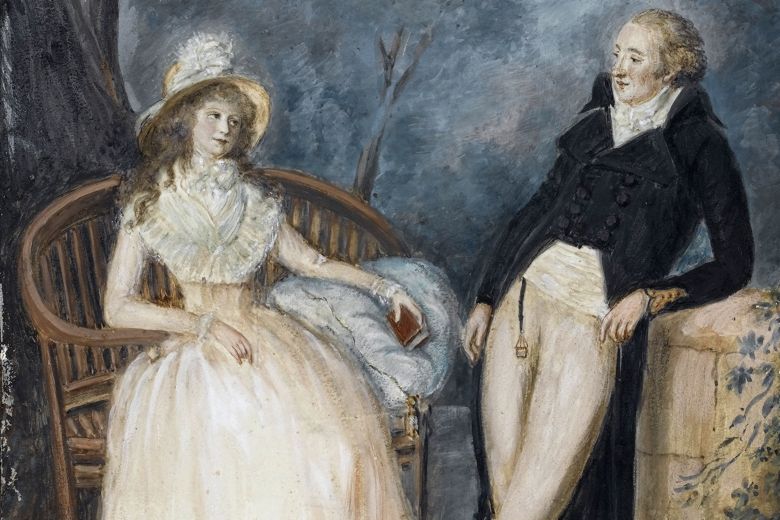
Famous examples of parody, their blend of irony and innocence, are a delight.  When Thomas Mann had become quite famous in his own right he could take on the most famous of German writers, with a parody of Johann Wolfgang von Goethe’s autobiography.  That this autobiography, Truth and Poetry: from My Own Life, was fertile ground for growing parody seems incontestable.  As Goethe looks back so glowingly on his childhood, for example:

On the night before Whit Sunday, not long since, I dreamed that I stood before a mirror, engaged with the new summer clothes which my dear parents had given me for the holiday. The dress consisted, as you know, of shoes of polished leather, with large silver buckles, fine cotton stockings, black nether garments of serge, and a coat of green baracan with gold buttons. The waistcoat of gold cloth was cut out of my father’s bridal waistcoat. My hair had been frizzled and powdered, and my curls stuck out from my head like little wings …  (beginning of Second Book)

In fine imitation Mann wrote Felix Krull, Confessions of a Confidence Man: the Early Years, narrated in an equally glowing tone, always a bit overly so, by an amusing crook.  Amusing in its own right, it is all the more so when reading Goethe alongside.  Of course Mann raises the stakes: such passages as “Since that impassioned girl had cursed and sanctified my lips (for every consecration involves both)” have as their counterparts passages considerably less inhibited. And the self-admiration is made just a touch more salient in Krull:

The connoisseur of humanity will be interested in the way my penchant for two-fold enthusiasms, for being enchanted by double-but-dissimilar, was called into play by this mother-and-daughter ….  I, at all events, find it very interesting.

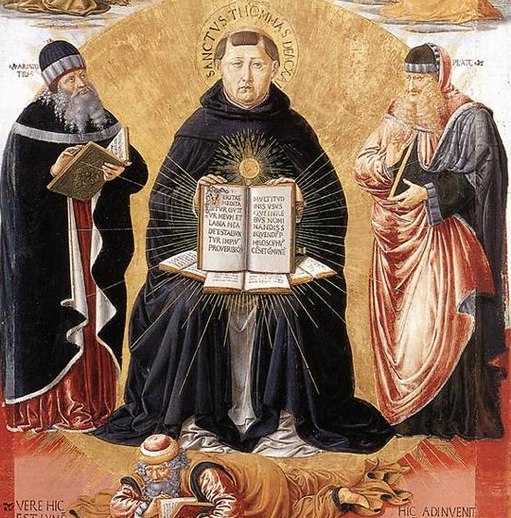
Admiring this style, I also tried my hand at it, but naturally in my proper milieu, a philosophical debate.  Deciding to stick a little thorn in the sides of scientific realists, I wrote a paper ‘Theoretical Entities: The Five Ways’.  Aquinas Benozzo_Gozzoli_-_Triumph_of_St_Thomas_Aquinas_-_WGA10334Thomas Aquinas’ Five Ways were his five proofs of the existence of God, still taken seriously in the most traditional Thomist circles.   In imitation thereof, pretending to be converted now to scientific realism, I wrote five proofs of the existence of unobservable entities, like electrons, quarks, or fields.  

The initial reactions surprised me.  Ronnie de Sousa was in England just then, and wrote me a detailed letter to show that my proofs were not valid. Just a week later Ronnie send me an embarrassed postcard, with a drawing of himself with mud on his face.  A philosopher whose name I forget (but would not name here if I remembered) wrote to say that he was compiling an anthology of articles about Aquinas’s Five Ways, could he include my paper?  Then Clark Glymour laughingly told me that David Lewis had come to his office, my article in hand, asking worriedly whether I was serious?  

So it seemed that my attempt to parody had misfired.  Most likely it had simply not been transparent enough.  When I included it as the last chapter in the book I was then writing, I gave it the new title, “Gentle Polemics”.  Then I added a footnote to make its intent crystal clear, “My reason for writing [this] was the remark of an eighteenth-century wit that everyone believed in the existence of God till the Boyle lecturers proved it”. In retrospect I can only say that my effort found no welcome.  Not a single review or critical article ever mentioned my so lovingly crafted literary exercise.   

Parody is alive today, everywhere, in popular culture — witness The Daily ShowSaturday Night Live, or Yankovic’s “Like a Surgeon” spoof of Madonna. But is there a welcome anywhere in academia, now so very professionalized and compartmentalized, if parody is practiced and not just  commented on? Sarcasm, irony, and even gentle parody can cut just a little to close to the bone.  It may be best, finally, to avoid parody when writing a philosophical paper, on pain of the sort of response we’d hear in the old West’s saloons, 

“Smile when you say that, stranger!”

with hand straying toward the holstered six-gun.

Etruscan Places

Etruscan Places

The Etruscans are a mystery, although the Romans’ drastic ethnic cleansing still left clues.  There are tombs, frescoes, smiling sculptures, vivid with a sense of life lived differently from their conquerors.  For us, besides the tombs, there is mainly the film, Jules et Jim, with Jeanne Moreau’s Etruscan smile.

In Margarite Duras’ novel The Little Horses of Tarquinia the characters do not get so far as to actually see those horses.  They are spending a week’s holiday in a little Italian village, between mountains and the sea, with nothing to do, enervated by the heat, talking in a futile, desultory way about how they could go elsewhere.

Near the end of the week Jacques and Sara’s difficult relationship turns into a plan to go see the little horses of Tarquinia.  The novel ends before they go.  But if there is redemption gained in this story, it is through the project itself, through committing to this project to go see the little horses. Duras allows an insight to appear in one of the many voices around them:  there are no holidays from love, you have to live it fully, boredom and all, you can’t take anything away from it.  

A little ironic?  They have spent the week fruitlessly attempting to enjoy a vacation from their ordinary life, from the others, from themselves …  Is that the sense of impossibility of a holiday, that is meant?  Or can we trust the sense of relief, of hope?  

I began to wonder what Duras had presupposed, perhaps required, of her model reader.  Would some knowledge of the Etruscans make the reference to Tarquinia, in this story, entirely transparent?

Some time in the mid-seventies I went with two companions to spend the summer in Tuscany, to discover Etruscan places and remains, to see the Etruscan horses of Tarquinia, and much else.  Equipped with two tents and an old car, we would seek out the scattered tombs or sanctuaries in villages and farm fields, especially those still preserved but unsung. We had a Michelin guide, which helped with the itinerary but gave little guidance to find non-Roman remains. And I remember a book, or perhaps several books, now quite lost, that gave directions not only to the famous necropoles but to Etruscan places in the countryside. 
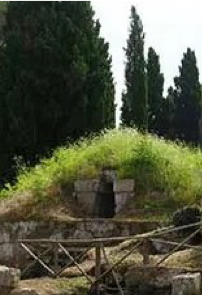
Etruscan tombI remember odd phrases, like  “Ask for the custodian in the village — he is normally to be found on the bowling green”.  And then the custodian would, sometimes a bit grumpily, fetch the key, unlock the door in what had looked like a small hill, let us in to the tomb. These small rural sites were not so spectacular but gave us the pleasant sense that, as itinerant but respectable vagrants, we were seeing much more than the usual visitors.

Tarquinia is rather high up, overlooking the sea, and the great necropolis is not far away.  What was left in the tombs was not at all just about death, rather, I would say, it was about death so as to show much about life.Tomb of the Tricliinium Tarquinia
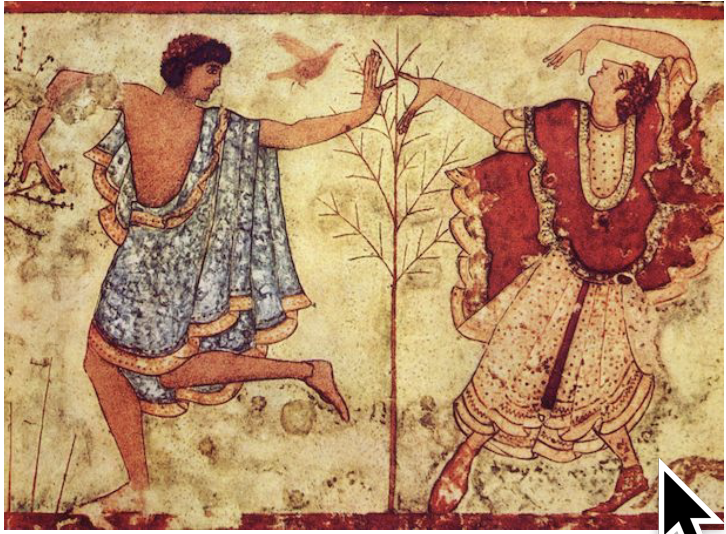
In the Cerveteri tomb of a woman of high rank, all her gold ornaments and silver vessels accompany her, as well as Etruscan-Tomb-of-the-Leopards-Tarquinia-Italy-GettyImages-102520524-5b0e51f48e1b6e003e8df782her four-wheeled carriage and — surely this points to the aspects of life she cherished most? — her bronze bed.

So many years ago.  We would put up our tents in this campsite or that, or sometimes in a farmer’s field.  Near the southern point in our slow meander we suddenly found ourselves overlooking Lago Bolsena, the lake of the Etruscans.  There was a story of the Etruscans moving, after destruction of their town where Orvieto is now, to the Volsini mountains, overlooking the lake.  We moved slowly, over a number of days, around the lake, and I have vague images of a tomb called the Red Tomb, but can find no reference to it now.

If Duras’ characters did go on to Tarquinia, what did they feel, and what did it do to them, seeing those paintings of abundant life, love, feasts and dances, horses and lions? 

My friend Arnold Burms, speaking about literature much later, said that the real mystery about stories is that we wonder how it came out, even though we know that there is nothing beyond what the author wrote.  We do not wonder about all the ways the author could have continued:  no, we wonder what happened next, what did happen in the end. Novelists can try to stop us from continuing with that question.  They can end with “Reader, I married him!’ or with a ride off into the sunset, or a death, but the question lingers.  And sometimes it is just what makes us never forget the story.  Now, with my ever fainter memories of Etruscan places, I realize that it is a question not just posed by novels, but by the stories in our memory.  And sometimes the answer can only remain forever that the story’s meaning is what it will have been, when all else is told.  

————– ————

 Il n’y a pas de vacances à l’amour, … ça n’existe pas. L’amour, il faut le vivre complètement avec son ennui et tout, il n’y a pas de vacances possibles à ça.

– Et c’est ça l’amour. S’y soustraire, on ne peut pas. Comme à la vie, avec sa beauté, sa merde et son ennui.   (Margarite Duras, Les petits chevaux de Tarquinia)

Ghosts in New York City

One evening in the eighties I got on a train at the Princeton Dinky Station, on my way to New York. Stepping into the compartment I saw Katherine Ramsland already there. I hadn’t seen her for a while, and thought she was teaching at Rutgers — asking about her classes, she just laughed. No, she had quit the teaching job for more interesting things to do.

Katherine was on her way to spend the night in the fabulous if aging Chelsea Hotel, famed for its literati, suicides, a murder, and stories of spooky phenomena. The people she would meet there were ghost hunters, planning to detect any ghostly presence by scientific means. Exactly what would they do? She was not too sure yet, but one plan was to chart temperature differences in the room, during the night, using an infrared thermometer. Why would the thermometer be infrared, I wondered, was it to keep it from reflecting visible light? But no, I had misunderstood, this was a new kind of thermometer, still in beta stage, that used infrared light, it could just be pointed at someone to read their temperature. In fact, Katherine told me, all the technology ghost hunters used was digital, electronic, state of the art, the old devices did not work for them.
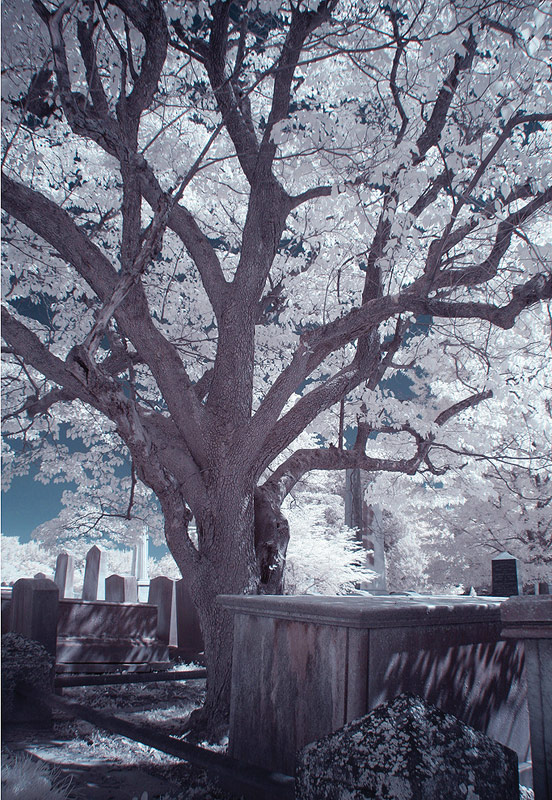
They had more plans, she told me with an amused smile. There was a hanging tree in Washington Square Park where many people had reportedly been executed in past centuries — already some digital sound recordings had interesting, puzzling features.

We met the next week, and several times more, as Katherine entered further into the ghost hunters’ world. In the Chelsea they had also used an EMF meter to detect fluctuations in the electromagnetic field. But the important finding was certainly in the temperature chart constructed from many carefully recorded readings: there was a central area, about one meter above floor level, in the middle of the room, that was much colder than the ambient temperature.

I asked her what was the norm, did they have temperature charts for other rooms as a comparison? She laughed: did I think they would spend long cold nights taking temperatures where there weren’t likely to be any ghosts? And she had to walk with care: the critical scientific spirit was welcome, anything construable as hostile skepticism wasn’t. But she had brought me a digital recording, made at midnight in the Princeton Cemetery, near the grave of Aaron Burr. It was not easy to make out … if it was a voice, it was someone repeating himself, upset that no one was listening, but I could not distinguish the words.
Then she took out her digital video camera and I watched short infrared movies of spheres and globs or ‘orbs’ floating around in a dark room. The ghost hunters claimed they were ectoplasm, as it were unformed ghosts. Could they be optical phenomena, I wondered? There would be a way to test that. Think of a rainbow: if we are at some distance from each other and both say we see the rainbow, we will actually see it at slightly different places on the clouds. So what about stationing several infrared cameras in the room, and triangulating? If the cameras all located the orbs in the same place they would be physical, otherwise not. Katherine thought this was a good suggestion, scientific in spirit, so could be welcome.

Some time went by. Now millions of people know Katherine Ramsland through her books, but then it was still quite easy to meet her in a bookstore cafe. She was only just getting into vampires, and I asked her to please be very careful … it sounded like a very scary scene.

After a while I asked her if the ghost hunters had gone for my idea of triangulating with differently oriented video cameras.

No, they hadn’t. They had just said, “What does he know about ghosts?”

Climbing, with minor fateful decisions

A fateful decision could be minor in either of two ways. It could be the sort of decision that elsewhere and elsewhen has led to tragedy, but in this particular case the actor gets off scot=free, Or it could be minor in that the decision was in itself of no great consequence, though the outcome could have been tragic.

This is going to be about two fateful decisions that were minor in both ways. Poor marketing strategy! It means that in the end they were negligible, the decision itself was not dramatic, and no one got hurt– so, who cares? Look at all those people watching in those climbing movies, Dawn Wall and Free Solo. Why are their hearts in their mouths, and why did so many of them come? Because they are watching whole sequences of major fateful decisions and imaging the great drama of violent death.

Every year the Alpine Club publishes Accidents in North American Climbing. Just the facts, ma’am, straightforward reports from rangers and other climbers, data to reduce death and dismemberment to statistics. Free to the members, but it can be bought by anyone, pdf or print, very cheaply. The Club is missing a bet here, and a great source of funds! With all that prurient interest ready to be tapped …. Some gleeful writing about the silly mistakes, some bloody pictures too, and they’d make the New York Times best-seller list every time.
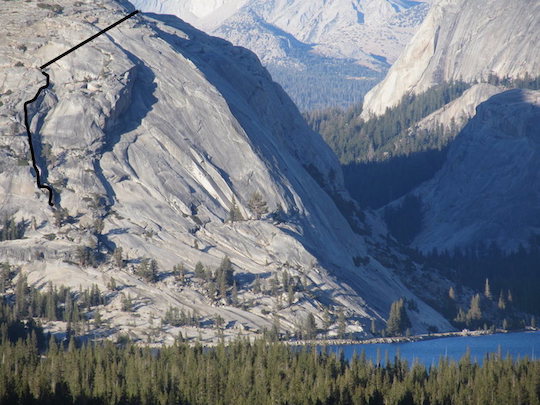
I cannot offer anything like such excitement. Worse: I will not be able to avoid all of the tiresome details that are so fascinating to climbers and so boring for everyone else. It was sometime in the 1990s that I went climbing with Keith (or was his name Kevin?) on the Stately Pleasure Dome in Tuolumne.

On the left side of this picture you see an obvious feature pointing up: its top is Hermaphodite Flake, and the blank part after that has several good bolted routes. One leads up and to the right: Eunuch (5.7R), the line I have drawn straight. The R stands for “Runout”, which means that some protection is scarily far apart. So Keith and I climbed up to Hermaphrodite Flake, crawled through underneath it, and turned to Eunuch.
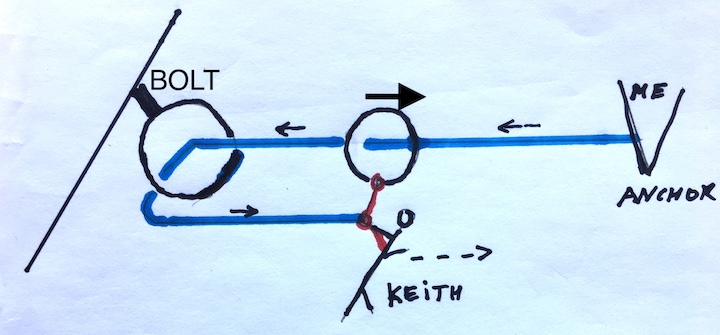
The exposed pitch I led had the run-out section, a long traverse with nothing but featureless slab below. I anchored myself at the end, and told Keith “You are on belay”. Now Keith had been to a mountaineering course, which emphasized a very professional attitude toward eliminating danger. When he got to the last bolt before me, at the start of the traverse, he stopped. If he fell on the traverse, he pointed out, he would swing and could hit the facing rock. So he set out to eliminate this danger in a clever way. He threaded the rope through the bolt where he was standing, and set off toward me, but with himself clipped to that still part of the rope. No way to fall at all!

When he reached me and attached himself to my anchor, everthing should have been easy. He undid the rope from his harness, and asked me to start pulling it in on my end. Beautiful …. except that when his end of the rope reached that last bolt, it turned out that he had left a knot in it, the figure 8 knot used to secure his harness. And the knot would not go through the bolt. We looked at each other. “One of us has to go there, back across the traverse”, I said, looking pointedly, and not charitably, at him who had left in the knot. “And then do the traverse this way back.”

This was a point of fateful decision for Keith. He got quite angry (at fate, presumably). But he could see more clearly than me. He had a knife in his pocket, and slashed off the nearly 30 feet of rope behind us. A Gordian moment! We finished the route with a 50 meter rope, and it worked.

I admit –a bit ashamed — being Dutch I was happy it had been his rope.

But my turn came, sure enough, to be in a position quite
like Keith’s. That was on a great adventure with Ric Otte,
Alvin Plantinga, and four other friends: climbing Lost
Arrow Spire in Yosemite. We began by hiking up along
the waterfalls to the Valley Rim. We would then rappel
down to get to the bottom of the spire –
next climb the spire —
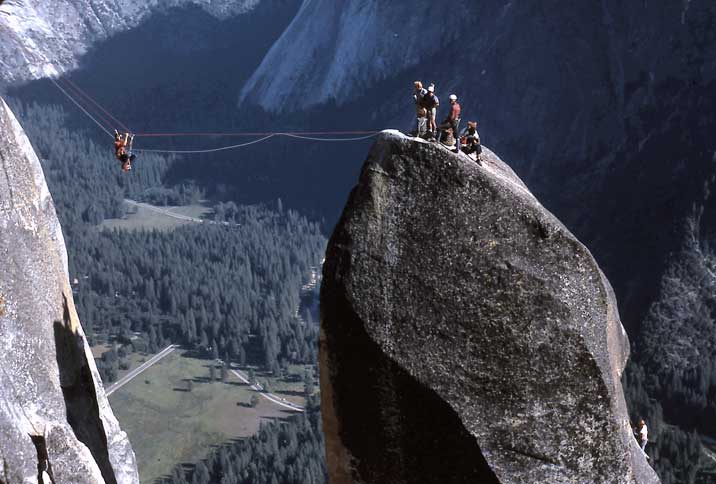
and next, get back to the Rim by Tyrolean traverse.

In my team Derek led, Ric free climbed following him, and I, the least experienced, jumared up on a second rope. They had given me a jumaring lesson the day before, not omitting safety tips and advice about how not to hang upside down. There would be much to tell, but let me get at once to the Tyrolean traverse.

Mechanically it is a lot like the diagram for Keith’s set-up. The difference is that Keith could walk, while here you were hanging on the rope, your feet in two etriers (a sort of personal rope ladder), and had to use your jumars to pull yourself forward. And a thousand feet or so below you see the roof of the Ahwahnee hotel …
Midway one of my jumars got stuck. I could not move
forward or backward. Did I face one fateful decision or
a whole series of them?
Perhaps a truly experienced climber would have had
the various slings, etriers, carabiners, and jumars so
arranged as to fix it quickly and elegantly — well, …
I began to tie slings and untie them, constantly telling
myself to check that I undid nothing unless
something else was
protecting me

I saw one of my etriers fluttering down, like a falling leaf …

OK, I got the jumar loose, now without an etrier.
And then I got myself forward on one leg and some
improvised ways of using the wayward jumar.

Jumars don’t get stuck, let alone difficult to do and undo, without some serious pro handling mistakes. Gods of the mountains, forgive me!

But well, just minor after all … never a mention in the Alpine Club news ….

Calvino, the fragility of memory

When Calvino starts writing his memories of a battle he took part in thirty years before, he is at once in doubt. “Maybe all that’s left in my memory of the whole descent are these falls, which could equally be those of some other night or dawn.” After fourteen pages he writes “Everything I have written so far serves to show that I remember almost nothing of that morning now”.

Here I recognize the doubt that continually qualifies some of his own character’s stories, memories, assertions, their dominant sense of the fragility of truth. When he depicts someone not subject to any failing in this respect, it is Agilulf, the non-existent knight, an immaterial intelligence traipsing unhappily through our human mess and muddle.

If now try to set down the few memories I have of Calvino, almost fifty years ago, it would show a quite misplaced arrogance if I just wrote them down linearly, blithely, unselfconsciously. Well, as if I were able to do so in the first place … In any case they lead me into a conflict: my memory’s voice is like the voice of another, of a bystander with unqualified authority, while my mind rebels, questions, attacks what it says.

At least this is true: I met Calvino at a conference in Florence in 1978, where I listened to him in simultaneous English translation. Happily he talked about one of my favorite stories, the story of Ulysses and the Sirens. He asked the unanswerable question “What were the Sirens singing?” and answered that perhaps it was the Odyssey itself that they sang.

Something special was arranged for the conference: a private tour through the museum corridor on the Ponte Vecchio. As we strolled through I walked with Calvino’s wife, Chichita, who talked with much feeling about some of the religious themes in the paintings. Realizing how much Calvino was ‘on the other side’, I exclaimed “Vous n’êtes pas chrétienne?”. But yes, she answered, and why not? I think she recognized my smile, there in communist Florence, among the literati of the left ….

But how could this possibly be right? She was born Jewish, from Argentine … Those paintings were on Christian themes though … Still … Perhaps I said “croyante” rather than “chrétienne”? Or perhaps she answered playfully, and I missed what she meant?

My memory shouts me down: what I remember is what it was! A memory is not a theoretical thing to speculate about, a memory is vivid, direct, it speaks with the voice of an angel,

But do angels speak the truth?

Does anyone, however hard they try? In The Castle of Crossed Destinies the travelers are struck dumb and tell their stories by laying out tarot cards. Their stories, from their failing and fictionalizing memory, go then through the prism of the others’ failing, fictionalizing reading of the cards. So the story we end with is at three removes from truth. What Plato said of art holds always.

In a break, of one sort or another, I was next to their daughter Giovanna, who was I think about thirteen at the time. Whatever she was telling me, what I remember is that I was confused about whether “ennui” meant annoyance or just boredom … and that she was laughing. Probably about my miserable French, but not unkindly.

None of this is out of the ordinary, but it is extraordinary for me simply because I was, and am, so in awe of Calvino, of the way he writes, like a philosopher’s fantasy of a novelist.
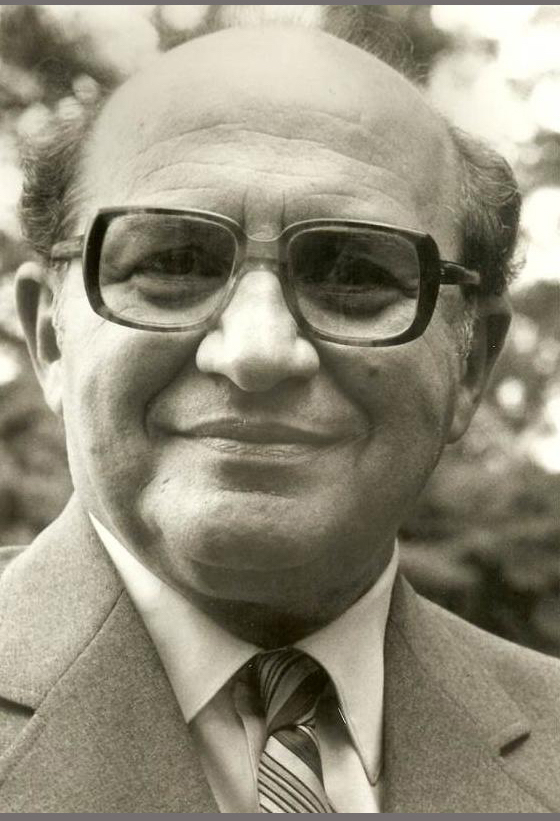
In the sixties, when I was at Yale, I had become friends with an editor of the Yale Press, Jane. She gave me a mission when I went to Los Angeles, to convince Richard Montague to let her publish a collection of his papers. I remember the meeting (Montague came to my friend Sidney’s party in a gold Rolls-Royce), but had the impression that nothing came of it. Something must have, for a few years later, after he died, Yale published a collection of his papers, edited by Rich Thomason.

I mention this seemingly totally irrelevant fact, to explain how it happened that I met Calvino again. Jane had moved to a publisher in New York, I had left Yale, but — probably at some conference — when I told her about Calvino’s speech in Florence she said: go see him, tell him I’d like to publish not his novels but talks, lectures, like the one you are telling me about. So that year when I was in Italy, Calvino was kind, he invited me to their apartment in Rome, to talk about it. Somehow, by whatever design, the apartment’s focal point was a cluster of photos of Giovanna. Chichita wanted to talk about her — Giovanna was in Paris, rebellious, caught up in student life …. words that inevitably bear images of the Left Bank, street protest, Colette, Henry Miller …. Who could say?

Calvino was courteously disinterested in more publishing possibilities.

Grunbaum and Popper

In military history everything is explained by just two factors: mistakes and clash of egos. If historians of philosophy were less uptight I think they might do the same.

For graduate school I wanted to go to Pittsburgh because I had read an article by Adolf Grunbaum, their philosopher of science. He wrote as one in command, and not as the scribes. As I began to see, reading more of his writings, he also conceived of philosophical debate as no-quarter, no holds barred, hand-to-hand combat. But this was entirely at odds with how he dealt personally with us students: with old-fashioned courtesy and respect, even sympathy, though not exactly moderating his uncompromising critique. When eventually I had submitted my first dissertation chapter draft I received it back with red ink comments on virtually every line. In my memory, as I told him later, I would see myself going to his office up some stairs with a print of a snarling wildcat. Both he and his secretary denied adamantly that there had ever been such a print, which means, I suppose, that the memory was a symptom of PTSD.

In debate with other philosophers, most inevitably carried on in print rather than person, there was no sign of anything like his sympathy and care for us students. Which brings me to one of his opponents, a great ego whose presence was always on the edges of my consciousness: Sir Karl Popper.

Meeting Popper and Miller, sometime in the seventies

I spent the year 1970-71 on a fellowship at Bedford College, in London’s Regent Park, with ample time to wander around its rose garden. The LSE was clearly London’s philosophy of science hub, and Popper’s department of logic and scientific method was famous — and notorious for its fabled autocratic, hierarchical style.

The first time I went there it was for a party with junior faculty and graduate students. I was quite out of my depths when the questions began: where did I stand on the Popper-Carnap debate? Which side did I take on deductivism versus inductivism? A bit too late I realized I should have read Popper and recent LSE papers … I could only waffle. But how could I do philosophy of science if I wasn’t up to date on these things? (The LSE students didn’t pull their punches, quite unlike the ones I had met at Bedford and University Colleges).

Going to their colloquia I soon came to understand what set them apart, and to realize how their conduct related to Popper’s intellectual ideals of audacious conjectures met by open and shut refutations. What it meant in practice was this:

a speaker would be confronted with a headlong charge purporting to refute everything he said. Then the charge would be at once, and graciously, abandoned at the first answer.

Popper would not always be there. If he was, and spoke, he would be accosted in precisely that way. After a while I conjectured audaciously (but silently) that what I was witnessing was training, the common cause of the participants’ shared manner of debate.

Which brings me to a Popper-Grunbaum confrontation where I happened to be present, sometime in the eighties. This was at LSE, in one of their annual symposia on the philosophy of Sir Karl Popper. When Grunbaum had turned to philosophy of psychoanalysis, in the seventies, he had begun an all-fronts attack on Popper’s view of the subject. Popper held that psychoanalysis is empirically irrefutable, and hence a pseudo-science. Grunbaum held the contrary: that it is empirically refutable, and was in fact empirically refuted.

As Grunbaum expressed this once again at the conference, Popper interrupted. Such Popper interruptions were dramatic. The moderator would notice that Popper had turned on his hearing aid, indicating that he wanted to speak, and would then at once stop all proceedings in mid-flow.

Popper challenged Grunbaum to present even one single example of an empirical refutation of Freud’s claims. Grunbaum gave one from Freud’s early work, in the 1890s. Popper replied “No, after 1900!” So Grunbaum gave another example from, if I remember correctly, 1918. Popper did not respond. I distinctly saw him fingering his hearing aid again.

But as soon as the official question period began W. W. Bartley III, one of Popper’s followers, took the floor.

Going through Sir Karl’s writings, he said, I have found only three major passages about Freud, all short, besides a few incidental remarks including a mention of his sister. Counting the pages of Professor Grunbaum’s critiques I am already well beyond a hundred ... this is, I submit, an overreaction, in the clinical sense of the word.

The only time I saw Grunbaum livid, and speechless ….

*NOTES

The Popper Newsletter of March 1992 has a report on a one-day conference on the philosophy of Sir Karl Popper which begins in a revealing way with

“The main purpose of the Annual One-Day Conference on the Philosophy of Sir Karl Popper is to stimulate fruitful debate on Popper’s philosophy. Hence the challenging tone of the talks. Mere exposition is both boring and unproductive, and speakers are encouraged to be as critical as possible. Such a spirit of criticism is in line with Popper’s method of conjecture and refutation: bold guess followed by severe criticism.” (downloaded 5/17/2021 from http://www.tkpw.net/newsletter/v4n1-2/node32.html#SECTION000413000000000000000

Grunbaum began to criticize Popper with a two-part article (40 pages total) in 1977-78: “Is Psychoanalysis a Pseudo-Science? Karl Popper Versus Sigmund Freud”, That his style tended to be polemic must be admitted. After Grunbaum’s presidential address at the APA, in 1982, Ruth Barcan Marcus, then the Chair of the APA Board, received a letter asking that Grunbaum be reprimanded for expressing contempt for the work of other philosophers. The letter writer, though, was himself known for an aggressively adversarial style.

The last eyes to see

In Borges’ “The Witness” a dying man is briefly awakened by bells that toll the Angelus, by then a common evening sound. But as a child this man had seen the face of Woden, the wooden idol hung with Roman coins, the sacrifice of horses. “Before dawn he will die and with him will die, and never return, the last immediate images of these pagan rites ….”

My eyes too may have been the last to see certain things. I may already be the last witness, of some things that mattered or didn’t matter, holding their last immediate images. As may be true of you (mon semblable, mon frère), though of different things.

Playing in the street outside my grandparents home I heard the soldiers marching. As they turned the corner, their faces like mechanical hog snouts, I ran frightened back inside. Some of those young men must have died when the Canadians came through; some may have lived to old age. By now they are gone, they to dust and their gas masks to landfill, every one. I was four. Do other still living eyes saw these men’s march in the village of Kapelle?

I vaguely sense the straw, in the half-dark cellars of the granary where we hide, with the assault above us. Mama and Oma are holding Marie and me, anxious and afraid, and I feel their anxiety again when it comes back to me. Later my mother tells me they were afraid for grandfather, standing by the entrance with other men — afraid because a German soldier had run inside and was hiding in the corner.

Some soldiers came in, he surrendered, they took him away.

Around when I was about twelve my parents were involved with a Pentacostal group, charismatics. The Apostle, Quist, a large man who had to stoop in the doorway, traveled around the country visiting the little churches held in people’s homes. These were the young churches of the Acts of the Apostles, alienated from the main church, which they equated with the Pharisees. I see Quist in our very small living room, the room with the stove where my father would start a coal fire in the morning for our heat and for cooking.  Quist was a forceful man, preaching faith, hope, and love in Christ as the answer to all life’s problems, full of kindness but with not a trace of compromise in him. The congregation prophesied, spoke in tongues. We were baptized by full immersion in the North Sea. Will I be the last to have seen the last true apostle of Christ? In this day, belief worn down to the threadbare, I do not think so. But what worth is a threadbare soul’s witness?

Borges says that an infinite number of things die in every final agony. Borges, Jorge, whatever I may call you, you are only right about the lesser witnesses in this world. Someone’s eyes were the last to have seen the rites at the great stones of Callanish, and we still see the stones and mark them in our lives. There will be someone else’s eyes who, dying, take with them the stones’ last immediate images. But that will only be because they will be the last eyes to die. No eyes will see after Callanish.

Standing in the wind and winter rain, as the last of our imprints on them fade away, they continue in witness, in silent faith, living hope, their unfathomable joy.