The Slav-Makedon

The Slav-Makedon

In the spring of 1976 I was in Greece, and about to go north from Athens.  I wondered if I could go to the peninsula of Mount Athos, the independent monastic region. 

Not too easy!  The region is under the protection of the Greek state, which safeguards its special dispensation.  First the Canadian consulate had to give me a document certifying that I was a Canadian citizen in good standing, and male.  No women, nor even any female animals, are allowed on Athos.  This document I duly took to the Ministry of the Exterior, where I received a permit to cross into Athos, an imposing document with some amazing looking stamps.

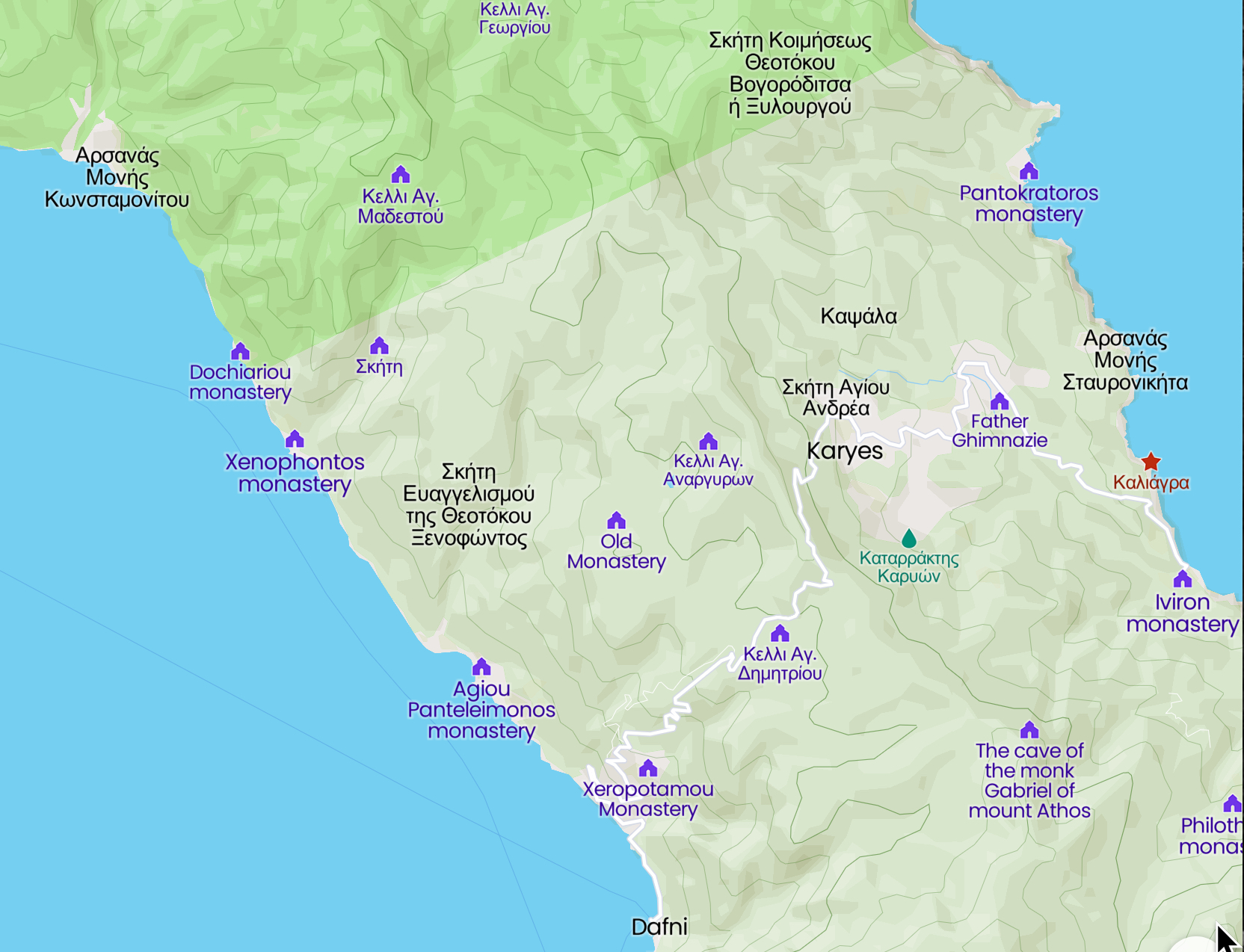
Looking through old notebooks recently, I found a sort of diary from when I was there.  The map and photos I’ve supplied now from the web — everything looks in better repair now than it did some forty years ago.
 Karyes = Karie

Thursday, April 17, 5 PM, in the bus from Thessaloniki. The lady beside me was ill the whole way. It made her hiccup, but not embarrassed. At first I thought she had known it would happen and had prudently dressed all in black for it.  But as  we neared Stagira (birthplace of the Stagirite, with statue to prove it) black became the predominant color. So did the outward signs of religion, if not of grace; shrines and chapels everywhere, just large enough for the weary to sit down and pray. We arrived in Ouranopoulis, on the coast, at 9:15 and I got a bed in a three-bed room. The rain had started again, and the town, bathed by the Aegean from the south and by washed-out lamp light from above, sank reluctantly into the night. The little hotel creaked and snored and shivered gently in the wind.

Friday, April 18, 6:30 AM. Asceticism begins here. Breakfast is Greek coffee and a chunk of dry bread. We get on a motorboat, which chugs up the coast in a alert sort of way, not shared by anyone on board. But there are foreigners besides me. A busy-body German who waves goodbye to his wife with a guaranteed long lasting smile; a couple of hairy Americans of the hip-but-heavy sort; and some German Wandervögel, dressed in plus-fours and knee-sox.  I want to walk alone, I decide to lose sight of them as soon as possible.   

I must shake off this misanthropy.

Friday, mid morning. We stop at the monastery of Xenophontos to pick up a jolly grey old priest with a tense monk. They come along to Daphne, and buy octopuses from the boatsmen when we land. Form the port of Daphne a bus takes us along their one and only motor road, to Karie.  The views are breathtaking and so is the driving; each bend is taken in first gear, but without slowing down. In Karie we must first obtain police permits; then bring those with our papers to the Palace of the Holy Supervision.  There we receive the Diamonitrion, the last and final permit.  

By this time I have decided against any itinerary that brings me back to Karie, or involves the bus, or, to begin at least, the presence of humans with or without mules. The girly magazine on the policeman’s desk was the last straw. I find a restaurant where they have two kinds of soup, and bread and water.  By now I am very hungry, all of it tastes like nectar and ambrosia to me. It is twelve o’clock. A shop keeper and a monk convince me, which much miming off wild boar and lack of signposts, not to set off for Monastery Konstamido.

Friday, noon.  Instead then I start in the direction of Monastery Khirapotamou. To begin the area is very cultivated, then the path goes into the woods.  I am anxious to branch off from the main road, to walk alone. Too anxious perhaps;  at one-thirty I am at a crossing I cannot place it on the map. But the walking has been good. I have seen dung beatles just like Doris Lessing describes: two of them rolling a bit of dung uphill, and then rolling helter-skelter after it. And flies with long legs, flying like storks. 

From the highest ridge I could see the sea on the north, and Karie and monasteries and retreats spread out in a giant fan. But I am probably lost. Just then a very small man in sneakers and a squashed gray fez shows up. He is going toward Khirapotamou, and walks ahead over a special shortcut. Frequented only by his tame rabbits and him, I’ll swear, unless there are more of these gnomes. Perhaps he lives at the fork just for wayward hikers like me. About two o’clock we are on a high ridge, and the monastery appears below.  I thank him and rest a while, with bites of the restaurant bread I had saved, and sips of retsina. I go down through a perfectly lyrical gorge, and see the little man perching in a farm building. At the monastery I do not go in, I am feeling restless, and set off at once in the direction of Monastery Panteleimon.

Friday midafternoon.  There is an official path according to map, but somehow I miss it.  I’m going cross country, following the sort of paths mules disdain.  This is medieval land — the touch of human hands everywhere, the paths clear and worn.  Whoever walks here doesn’t come with foreign objects, concrete, steel, or asphalt. A bit after 4 o’clock, I sit on a rock with my bare feet dangling in the sea. Cannot swim!  Men in shorts are expelled.

A small boat in a large body of water

Description automatically generated

5:00 Friday.  I reach Panteleimon.. The buildings rise up like man-made cliffs. There are three huge four-story buildings by the sea and a bit behind them, the monastery proper.  It is like a little city, but a dying one. No single building is in good repair;  paint is peeling, windows are broken, roofs are falling in. The monastery can be entered only by the main gate, solid wood and iron, tons heavy. There is no one. I push the door open, walk into the courtyard. I am dwarfed by the cliff-like walls and towers all around, and by the silence.

There is a fountain with no water; two gongs, one of rusted iron, one of wood. There is no one. Hesitantly I walk on, through corridors that lead nowhere.  Through one window I see an eating hall, as in a college, with seating for hundreds. Through another window, religious paintings.  One corridor finally brings me to human noise; a kitchen.  A solitary cook stands working between a great fire and a mammoth iron pot of green beans. I knock, but he does not hear. I turn a corner, and find an old gray beard, sitting on stool with a cigarette, the picture of dejection, frozen in body and in spirit. ” Kale sphera!” I say.  “Germania?” “Ochi, Kanada” I reply. The eye descends again, but past the cigarette, which falls to pieces between strengthless fingers. I go back to the cook, and catch his attention. He gestures irritably. I walk out, back through the courtyard and the gate, to sit on the outside steps, and read.

7:45 pm Friday.  There was no sign of life still about six, then a laborer directed me to one of the three large buildings by the sea. It seems deserted too, but I wandered its corridors till I found a monk. He showed me a small room with a bed, and gave me food: lentil soup, bread, and water. I read for a while, then I  go out. 

In the gardens there is a huge monk, pacing the walk, playing with his beads, and taking the odd gargantuan sniff of a pink rose. I don’t want to disturb his meditation … but he notices me and comes over.  “I speak English”, he announces.  This is the Slav-Makedon. I call him that in my mind, since he describes himself so repeatedly.  By nationality he is Greek, from the North Western part, Greek Macedonia.  He tells me that this monastery is Russian, and that he has learned his English from a book without teacher (but surely he must have learned the pronunciation in a different way?)  

At present  the fathers are asleep, he says; they will awake at midnight for a liturgy lasting till dawn.  Walking with me he shows me the great hall, we go to stand inside it. The next morning I will be able to see the church. But now I must go in. The monastery closes at 8:15, so does the guesthouse. I return to my room and the monk who takes care of guests lights my oil lamp. Tomorrow I plan to walk all the way to Monastery Kostamitou.

Saturday.   I am ill. I spend the whole day in bed, with well-meaning interruptions every two hours. I get weak tea and bread. The Slav-Makedon brings me an orange and an aspirin at noon, and I realize from the special care that an aspirin is valuable here.   He tells me his life story. He was a poor boy, in the Communist part of the country during the Civil War. When he was about fifteen the Communists lost.  It was like Vietnam, he says, with planes bombing his village . Some years later he did his stint in the military, then was ordained a Deacon. He finished high school in Karie five years ago, when he was thirty.  But under the dictatorship he could not get a passport to go study in France as he wished. Greek communities do not wish him as Deacon, as his native language is a Slav dialect.  He thinks, though, that if he stays in this Russian monastery for two years he will get a testimonial, and perhaps he can get a post abroad. 

As he is telling me this plan, his sense of the difficulties overwhelms him.  “I am a very poor man, I was always poor.”  He turns his face away, and smites his brow. “I have not had good luck, born a Slav-Makedon.” 

In the evening I have some soup again, potatoes and mint soup. The Slav-Makedon returns and brings me something that looks like houmous and bread. I start eating it, and like it rather. He explains he has made it himself of oil, onions, and the eggs from the belly of a fish. It’s called Dharama-salata. I finish almost all of it.  He sits down heavily.  In appearance the Slav-Makedon is a heavy-set fellow, looking ten years older than his actual thirty-five, with large black gray beard and balding forehead.  He is reflecting, perhaps my coming has made him reflect more on his situation, or more sadly.  He says “I am still a khoungk man, I do not like to stay in the monasteries”.

Sunday morning.  I have weak tea, and feel better, though still a bit weak. I shall stay here this morning to see the church, and in the afternoon walk for only one or two hours.  About 8:30 in the morning I enter the monastery gate and one of the caretakers leads me up interminable stairs, deep into the cliff of buildings, to a great church. The audience slowly grows, bu t remains small, consisting of me, some monks and laborers. There were about eight monks present altogether. 

Text, letter

Description automatically generated

Diagram.  Here I stand and sometimes sit in the tall chair marked X.  The circle marks the dome with skylights, and a giant chandelier. The wall that separates us from the priests is all gilt with large paintings and ikons. The shadowed part is a trellis door.

The service was already going on and last two more hours, choreographed in the minutest detail. First I was only aware of the chanters, the fathers. Then I heard a chanted reply from behind gilt wall; I realized that was a trellis in it, for I saw candles moving behind it. Then the trellis was opened, it was a giant door, and the priest appeared. He was dressed in grand purple and gold robes, bare-headed, blond and youngish; attention totally withdrawn even when he came near us with the incense swinger to greet us each with a ceremonial nod; parchment-white skin drawn tautly over fine bones.

Major parts of ceremony were marked by the opening or closing of the gilt doors, and twice by the drawing of a red (scarlet or vermilion, the light was dim; at least, not purple) curtain behind the gilt. The priest would bear the objects forward: a book, two chalices covered with purple and brocade, a cross — sometimes he was followed by a monk with a candle in a giant holder. The service ended with communion, which involved only bread and no wine.  The bread was carried around, and I was encouraged to partake, it was rather like a hospitable offering of bread all around, more friendly than solemn.

The Slav-Makedon, who had been one of the chanters now showed me various paintings. One was done almost entirely in white gold, of the holy family; one a Madonna and Child with many blue jewels; one of St. Pantoleimon, whose eyes were focused on me whether I stood far and to the side, or close and below; one with small pictures, one for each day of the year. We walked down the stairs to the courtyard, and I was invited to eat with them. When I say “we” here, I mean the laborers and a couple of deacons, not the priest or fathers, who had stayed behind. I sat in the sun for five minutes feeling weak. 

We went in, the Slav-Makedon and I, and he pointed me to my place. This was the great eating hall.  An old monk, another monk, the deacon, the Slav-Makedon, and I each sat at the head of a different almost empty table with room for fifty. We sat before our food, waiting. Then the priest entered, now in black, with three chanting monks; he bore a candle to its place, and the old monk got up and began to read scriptures. The little group went to sit with the Slav-Makedon, and the priest rang a bell.  Then we ate. The food was a chick-pea soup (of which I ate the solid part), bread, water, wine (one sip; it was strong and harsh), fish gruel (I ate none, wisely). There was no chatting; this was part of the ceremony, and when the priest had rung the bell for the third time, we filed out, to another church, across from the eating hall.

I stayed only a little while; then I left at and packed. At quarter to twelve I started walking to Xenophontos, hearing the great bell behind me.

Sunday afternoon.  I have made up my mind to go back tomorrow morning. The idea cheers me up a lot, actually, for I am still not feeling very well. I am walking like an old man, through a beautifully sunny countryside. My senses are turning inward, it needs an effort to look up. But slowly my headache disappears, and my stomach stabilizes. I walk very slowly, and of course, meet no one. 

About halfway along I come upon a large two-story house, by well tended meadows. It is deserted; the door has been taken off, and five bulls live inside. They come out one by one, bells clinking, and stare at me with arrogant curiosity. Their evident aristocracy reminds me of the Russian priest officiating intensely seriously at the ceremonies, daily, oblivious of the decay of his monastic city. Somewhat farther still a small stream rushes across the path, and falls clattering into the gorge below. There are smooth rocks around it, and I lie down, on my rucksack, to doze in the sun. I could sleep in this sunny day forever. But I do go on; and Xenophontos appears.

It is much smaller than St. Panteleimon, though still a large complex.  The outbuildings are also dilapidated, but once I pass in through the gate, everything is very well kept, painted, repaired. There are monks going about their mysterious business, and well-cultivated areas of land below the walls. The monks offer me coffee, but I beg tea; it comes strong and sugary. I feel much better. I doze in the sun, and even write some parts of these notes. Except for giving me tea, and answering my questions about the boat, the monks leave me totally alone.

I was happy to see some signs of age and creeping destruction here and there, as I wandered around, for so far Xenophontos had looked like a Swiss Farm compared to Panteleimon.  There is a great noise off bells and gongs from time to time.  Also great periods of quiet; but it is a well-tended quiet, not the desolation of the Russian monastery.

Monday early morning.  I wandered away yesterday, and missed the meal, which must be earlier here than in Panteleimon. But when they realize it, the monks made a great to do (they came upon me reading in the lounge)  and took me to the cook.  He brought me a heaping plate of potatoes in a sauce of mint and spices, in a smallish dining room (designed for about forty or fifty, say). The wall was covered all around by murals of saints and monks, the dominating color black, and the colors were fading badly. 

The boat is waiting.

One or Two Saints, More or Less

“I see that you don’t listen to the Pope either!” This was the teller in the Bank of Montreal in Toronto, where I was living then.   She touched her own St Christopher medal, and pointed to the one I wore.  Just a few years before Pope Paul VI had removed ninety-three saints from the canon, the saint of travelers among them.  That did not end my fascination with the saints or their stories.

The Provence is a region that abounded in early Christian saints. It is now long ago that I first went to the Camping La Vallée Heureuse, at the  foot of the cliff that holds Notre Dame de Beauregard.

Such chapels    were my landmarks, as I tried to find out more about the history of those   saints, who Christianized this pagan countryside.

Almost every village there seems to have had a local saint, and I am always hearing about more.  Quite recently, driving near Tarascon, my sister in law Pascale told me of how Saint Martha tamed a local monster, the tarasque.  The beast’s ending was sad, though, for the villagers, not trusting in a permanent soothing of the savage breast, killed it nevertheless.

The stories are often fanciful. After all, they belong to many centuries of folklore.  When I would follow them up in The Golden Legend or other hagiographies, the stories would branch, mingle, blend, and conflict.  But for myself, I keep fast to the stories that beguiled me.    

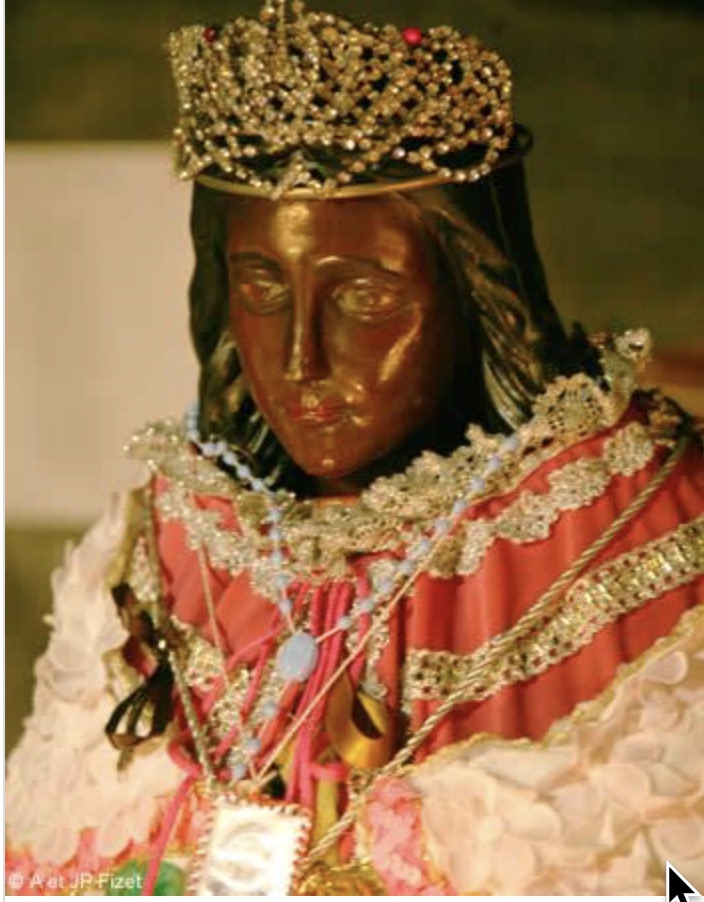
  Today Saint Sara the Egyptian is worshiped by the Roma, annually at     Saintes-Maries-de-la-Mer, and they carry her statue into the sea.  The Bishop comes to give his blessing although, just as in the case of St. Christopher, the Church does not  recognize her as a saint.  

The story I heard is not one of those told at this feast, but it is the one I love.

In the first century of our era Sara, a black woman from Egypt, was a serving maid in a Christian household in Jerusalem.  This was during the years just after the crucifixion, a time of persecutions.  The entire family, their servants, and some other Christians — as it is now told, the three Maries of the Gospels — escaped  on a boat.  The Mediterranean was stormy, so stormy in fact that when the tempest was over, the ship was adrift without sails or rudder.  Happily a coast was in view; it was the coast of the Camargue, west of what is now Marseille.  

How to reach it?  They prayed for a miracle, but no miracle happened.  The boat drifted aimlessly. Fishermen came out in little boats, and offered to tow them for a fee.  But all ballast, including all that was valuable, had been thrown overboard during the tempest, to lighten the boat.  

The fishermen were adamant.

Then Sara, who was very beautiful, offered a payment, and the fishermen accepted.  Sara stood on the prow and slowly disrobed, a saintly strip tease, for the duration of the towing.  That is how the Christians were saved, and how the Camargue was first evangelized.

The Church and historical fact aside, Saint Sara is a real saint.  Later, traveling east into northern Italy, I learned of a woman who is not a saint but might well have been.  This the story of the Beautiful Ada.

I heard about her when visiting the Abbey of San Michele near Torino.  The care-taker monk told me the legend. It happened in a time of war, but there were so many wars, skirmishes, raids, sieges.  Ruins of forts and castles are strewn everywhere across this region. Ada was a young woman in a village near the Abbey.  When the soldiers came all the villagers rushed to the Abbey for shelter, but the enemy was on their heels. Pursued by the mercenaries, Ada fled to the top of the monastery’s outer tower. She heard the soldiers’ boots on the stairs behind her, there was nowhere to go.  Commanding her life to the care of San Michele, she leaped off. There was a miracle.  Miraculously unhurt, she escaped to safety.   
But during the Feast of San Michele a year later, she leaped off again, on a wager, and it broke every bone in her body.  

The Beautiful Ada might have been a saint, if not for one foolish moment later in life.

The Unveiling of Marx Hall

Marx Hall is not actually a Hall in and by itself, it was an annex, grafted on to the eastern facade of 1879 Hall.  

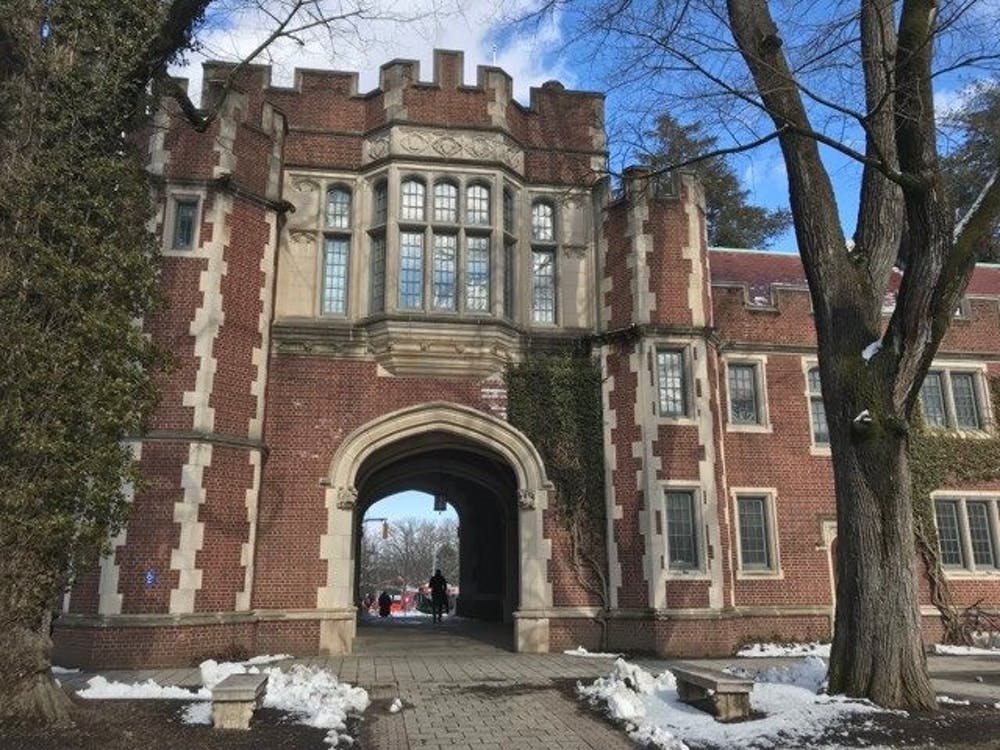
Since it ceased to be a dormitory for Princeton’s gentlemen students and their servants, the eastern half of 1879 Hall houses Philosophy, while its western half has Religion.  The two are separated by a  imposing, not to say intimidating, archway.  Above the arch Woodrow Wilson had his office, till the alumni got rid of him for wanting to interfere with the eating clubs.  It has a fireplace large enough to roast lambs, and was given to Philosophy for its faculty meetings, social gatherings, and — during some years rather out of the ordinary — raucous parties. And then, in 1992, came the announcement that there was to be a grafting-on of a new and modern space, for a Center for Human Values.
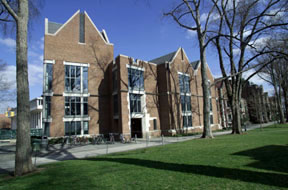
“What is the intended contrast?” my friend Martin from the English department asked.  “Will there be center for inhuman values, I wonder?”  He had probably noticed that I was a bit disgruntled, for it meant losing my office.  I did, and actually never got it back, its handsome fireplace and window seat were just right for a department lounge.

At the completion of the new Hall, though, there was going to be a grand ceremony for its opening.  The president and a vice-president of the university, the relevant dean, and the donors.  Unlike the donors’ appearance in medieval paintings, humbly marginalized in the company of saints, these donors were the saints who made it all possible.  The physical entity, the annex, was to be named after its donor, Louis Marx Jr., and multiple aspects of the Center’s intellectual embodiment after its donor, Laurance S. Rockefeller.  Both would be present to be honored, thanked, and feted to celebrate the opening.
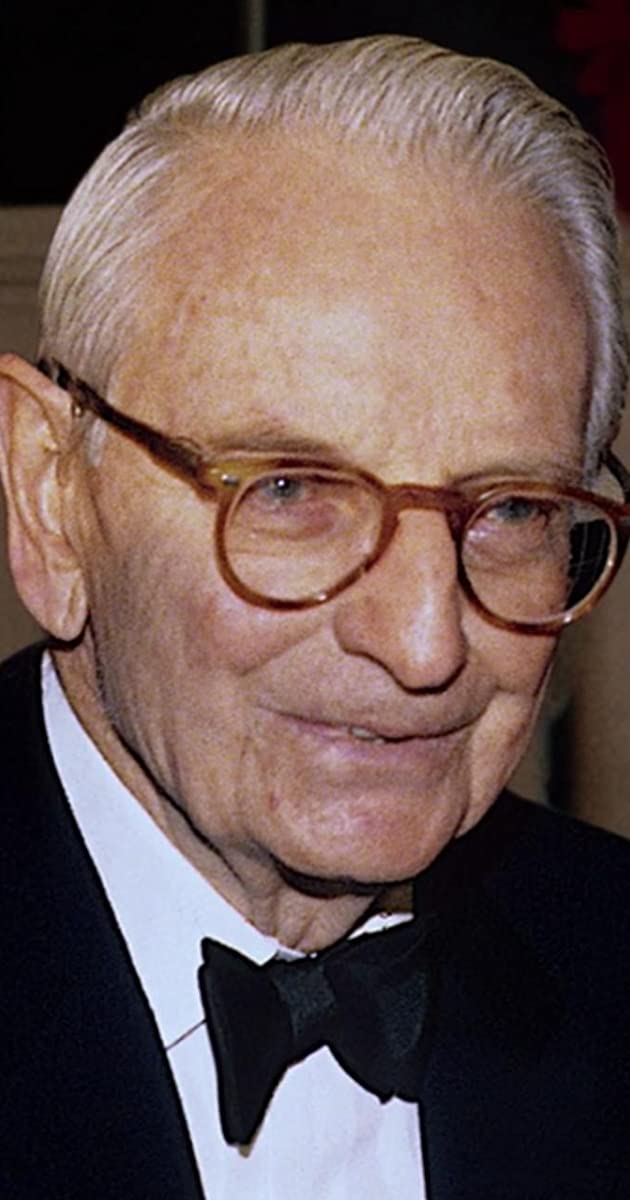
A sort of bandstand was constructed just outside, in the yard, and we all gathered around there, realizing that there would be no wine till after the ceremony, which could not be brief given the number of speeches that it had, of necessity, to involve. As they climbed on the platform I located the donors by a process of elimination, two men, one taller than the other, rather a commanding figure, the shorter one grinning amiably.  President Shapiro’s speech quickly identified the taller as Rockefeller, with whom I was rather intrigued at the time, knowing of his interest in the UFO mysteries.  Shapiro referred appreciatively to Rockefeller’s 1932 senior thesis The Concept of Value and its Relation to Ethics, still available for reading in the Mudd Manuscript Library.  The other administrators mentioned this too, and all had gracious things to say about Louis Marx Jr., though with no mention of scholastic prowess.  One did mention that Louis had been a member of the Cottage Club.  I thought I could sense a reluctance in the remark; even then, in 1993, the eating clubs’ disturbing record of debauchery was hard to keep quiet.  The sincerity of the thanks and admiration was overwhelming. Such happenings are not choreographed, but it could not have been more consistent if it had been.  My friend Martin did not see it the same way. “They are whores”, Martin was saying beside me, “they are whores!”

When Rockefeller got up to speak, there was not much need for him to say much, for he was at once presented with a gift, in honor of the occasion, of a painting.  It was, perhaps surprisingly, wrapped and taped up in packing paper, as if it had been meant to reach him through the post.  After a moment’s perplexity Rockefeller forcefully attacked the wrapping.  Someone was bringing up an implement, a knife or scissors, but paper was already flying everywhere, frustratingly resisting tape pulled off forcibly over the edges, and Rockefeller held up the picture in triumph.  Hard to remember what it was, I trust it was something appropriate.
Louis Marx Jr. did not receive a gift, understandably perhaps since it was he who was giving us this great brick artifice.  But he was very excited to speak.  He was so glad to be back, looking back to 1953 when actually it had been touch and go whether he would graduate.  He was not in the regular graduation ceremony but had a special hearing, with a committee that included very important people (do I correctly remember his mentioning Dulles and Eisenhower?), and he got his degree.  He was laughing a lot about what a bad boy he had been, how he had shrugged off the deadline on senior theses (and here he was!  donating a whole building to his once reluctant alma mater!).  The president was smiling, the dean was smiling, indulgently.  What a turn of events, what a come back for the black sheep of Princeton ’53!  With a campus building now to bear his name.

The final speaker was the Philosophy chairman, Paul Benacerraf, a man I admired greatly.  So I was apprehensive, was he going to join this chorus, this genuflection?  His first few sentences were praise for the enhancement of political and social philosophy that the Center would bring about on our campus.  

Then he said he wanted to take the opportunity to speak in the memory of a philosopher who had been a guiding light in our community, and had recently died, Gregory Vlastos.  After relating Vlastos’ memory to the topic of human values (I quite forget just how he did that) he spoke of Vlastos’ conviction that matters of the intellect should always have priority over any material concern.  Vlastos, as chairman of the department, had insisted that resources should go to encouraging study, scholarship, understanding, if necessary at the cost of any improvement of our physical embodiment in 1879 Hall … words to this effect … 

I doubt that anyone on the podium took in what Paul was saying, but I certainly did.

This past fall, a quarter of a century later, The Daily Princetonian of October 16, 2019, included an announcement from the university’s Office of Communications. Marx Hall will be renamed,  “because the donor’s circumstances have changed, making him unable to fulfill his fundraising pledge.”  

The 1960s Connecticut Metaphysicians

In 1966, just out of graduate school, I got a job at Yale, in New Haven, Connecticut. These were the days when co-education was only just becoming a serious possibility, though not actual at Yale till 1969, after I left; so all my students were boys, mainly from private boys’ schools. I heard them discussing very seriously whether they would still be able to pay attention at all in class if there were girls in the room.

But in the sixties even at Yale there were some murmurs of revolt, though at that time not yet against the Vietnam war. There was a dress code, jacket and tie at all meals. For the first time in Yale’s history there was dissent, even some protest. On one such occasion some of the boys showed up in jacket, tie, and T-shirt, others in a jacket with the sleeves torn off.

The philosophy department was large and very diverse, philosophically; it had been built up with a zoo-director’s ideal of having at least one, but not more than two, specimens of each species. So I certainly can’t talk here about all my colleagues, but some stand out. In philosophy of science we had the famous Norwood Russell Hanson (he would need a whole post of his own). On the other extreme there was a youngish man that I would often come across on the campus, walking with an umbrella, wearing a long raincoat, regardless of weather. No matter how I approached or said hello, we never reached the point of eye contact. So all I have is hearsay, in all likelihood not too trustworthy. He had come to the campus as a freshman at age 18, and never left. His undergraduate thesis was on Love in 19th century philosophy, his master’s thesis on Love in the German Romantics, his dissertation on Love in Schelling and Schleiermacher. Now he taught German philosophy and was said to have just had his first date. We must assume that he was well prepared, but nothing further was known.
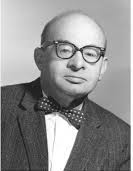
We had a then (or perhaps a bit previously) famous metaphysician, Paul Weiss. Yale is not a simple entity, it is actually a cluster of residential colleges, each being a dormitory with a well-appointed suite for the Master as well as rooms for some favored, single, presumed to be celibate, faculty. Paul Weiss had the penthouse of one of the modern colleges, I think it was Ezra Stiles, architecturally famous, designed by Eero Saarinen (a Yale graduate, naturally).

There Weiss held his soirees. I think it was Tuesday evenings, or perhaps Wednesdays. Many of us went quite often. There would be sherry and biscuits, and Weiss would say something to guide the evening, like “I have been thinking … [thoughtful pause] … about the Problem of the One and the Many …” Even die-hard empiricists and cutting edge analytics could be heard entering into the problem. If an animal has many parts, what makes it one thing? A unity rather than a multitude? Or the universe, what principle of unity makes it one? (Maybe I am not getting this right …. it was all rather obscure, and yet the dialectical moves in the game were obvious..)

Paul Weiss was a bit touchy and most certainly feisty, quite appropriate for someone of small stature so often in the midst of a critical crowd. I had written a footnote to the effect that for my view about the Excluded Middle I considered myself in good company, “as witnessed by Quine, who mentions Paul Weiss, Yale University, as having been brought “to the desperate extremity of entertaining Aristotle’s fantasy that ‘It is true that p or q’ is an insufficient condition for ‘It is true that p or it is true that q’.”  Weiss confronted me about this, how was he to take that? I assured him it was meant as a compliment, on my part, even if not on Quine’s. He still looked at me a little doubtfully.

“Tell me” he said, “You are a logician. Isn’t it true that logic is very hard?” I grinned a bit and said that all the students thought so. “Ah”, he said, “but isn’t it true that the more you practice and study logic, the easier it becomes?”

I nodded assent. Weiss suddenly stood up on tiptoe. “That is the difference between metaphysics and logic! Metaphysics never becomes any easier!” He looked wicked in triumph.

But my favorite metaphysician was Frederick Benton Fitch. He was also the main logician, and an extremely careful person: any system he created had to be provably consistent — regardless of cost. Part of the cost. which he happily took to heart, was that he must therefore work on the most foundational of logics, combinatory logic (at that time taught in only two places in America, the other being Penn State). For however careful and prudent, Fitch was nothing if not a maverick in matters of the intellect.

In person Fitch seemed to me the paradigm of a Southern gentleman. Unlike — in my experience — most logicians, Fitch was a gentle, conservative, courteous, quiet person. Dress code remained permanent in his life, I cannot imagine him in shirtsleeves. For personal idiosyncrasies he was only known to be cultivating flesh-eating plants, which he fed the aphids from his wife’s rose garden. What was remarkable, though, was something he explained at our very first luncheon on campus.

“I do believe that I will go to heaven”, he said, “for I have done something for God. I have proved his existence.”

I wasn’t at all sure that he was not joking with me. But he continued, “Each spring I teach metaphysics, and the entire course leads up to the proof of God’s existence, in the last week.” This was all entirely straight-faced, and so was the disappointment he then expressed: that in the current version of the proof, God turned out to be a relation.

His commentator Charles Baylis at the APA, where Fitch had presented his views, said that he did not see anything worthy of worship in such a God. Fitch retorted that he would not elaborate on his conception (form? practice?) of worship. There is no doubt that Fitch worked conscientiously on his metaphysical system, and still, I could never quite lose my suspicion, that he was just secretly smiling to himself.

APPENDIX

About co-education: The Harvard Crimson reported on November 15, 1968 that “Yale President Kingman Brewster announced yesterday that Yale will become coeducational in September 1969. The announcement came shortly after the Yale faculty approved with only one dissenting vote a plan to admit 250 freshman women plus 250 upperclass women by transfer. Eventually 1500 women will be admitted in addition to the 4000 male students.”

There had been controversies at all the ivy-league universities and colleges, beginning already with the desire of students to be less constrained by curfew in the dormitories. When someone argued that students could not do anything after midnight that they could not do before, the president of Bryn Mawr famously retorted “Yes, but they could do it again!”

About Vietnam protest: The Yale Daily News of March28, 2001: “Protest season didn’t hit Yale until May Day 1970, but the next few years were full of action.” On other campuses anti-Vietnam protests had begun in 1965. But the Yale chaplain, who became a leader of the anti-war movement, recalled some student involvement (possibly in the protests in nearby New York City?) some years before 1970.

Elsewhere there are reports of several Yale faculty being involved in the anti-war movement as early as 1965, when Lyndon Johnson ordered the direct involvement of American troops in Vietnam.

For more about Frederick Fitch there are several posts on my other blog.

Parachuting (mis)adventures

You owe it to yourself to jump at least once in your life.

(Slogan on a parachuting course advertisement)

I believed that, it had the ring of truth. So I enrolled in the course. This was when I was living in Toronto, and the parachuting club had a small airfield in the middle of farmland about 25 miles north.  There they were equipped with two little airplanes, a usually muddy runway, a barn full of parachutes, and lots of enthusiasm.The course was a mixture of practical instruction and war stories about parachuting mishaps. 

“Some of you may have heard that we had a death here last year” the instructor said.  ” I can assure you it was not an accident, there was nothing wrong with the parachute or with the jump, it was a suicide.
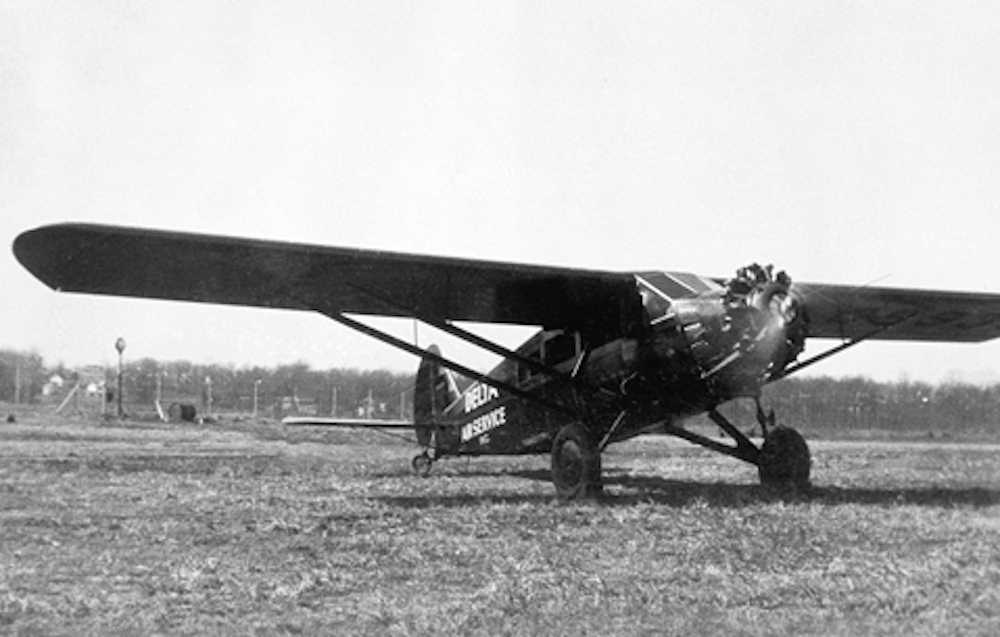
This young woman was an expert jumper, she had been away for a year, then suddenly showed up last August. She went up, the jump master swears that everything was in order, and no one saw anything wrong when her parachute deployed. But she hit the quick release button, candled, and fell 1800 feet straight down. With that distance she reaches terminal velocity, that is 120 mph, and so she died instantly when she hit.”

The details were pretty obviously intended to intimidate us.   Well, it worked, for me anyway.  

I wanted to know what he meant by “candled”, but the first lesson was just how to strap on our parachute — surprisingly, a big one on the back and a small one in front.  There was a sort of buddy system, with some experienced jumpers to help us. My buddy, who was always ready to help or chat, was a ruddy young guy, who told me a lot about different kinds of beer.  On all his walls he had parachuting stuff hanging, he told me, any girl he invited in wasn’t going to be left in doubt about his daredevil life.

“You are attached by a static line, which will open your parachute within four seconds. Count:  “a thousand and one”, “a thousand and two” …  As soon as it opens, make sure that the shrouds are not tangled. If they are, start untangling them at once. If they don’t get loose you have to use the emergency parachute on your chest. Here’s the ring, pull it. The chute will not come out by itself, hit the pack, pull it out, and push it away from you to deploy. The big parachute above you may interfere, so that is when you hit the quick release button to let it go.”

The instructor pointed to his remarkably large belly, telling us that it gave him an advance when jumping, because it shifted the center of gravity forward.  “All you skinny guys have better lean in, to compensate”.  This was relevant, it was one of the things I would always remember later, but I never remembered it when jumping.   I put up my hand and asked why we needed to count.  

“Well, there is a small possibility that the static line is stuck and does not release you.  Then you are dragged after the plane.  

If that happens, the jump master will see you.  You put your hands on top of your head, to signal that you are conscious.  Then he cuts the line, and you go.  You have to use your emergency chute at once in that case.”  

No one asked what happened if you weren’t conscious. Better not to know.

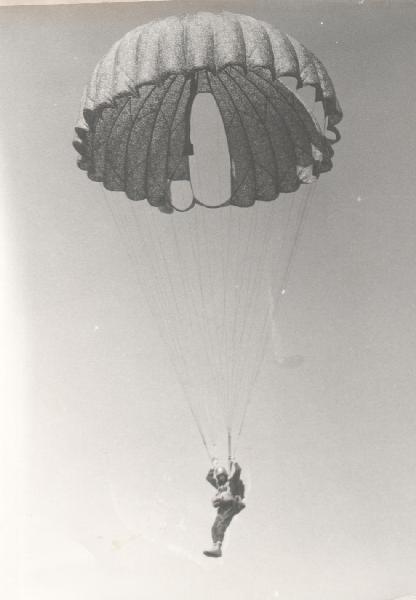
So we practiced falling and rolling and undoing the chute, folding it up and carrying it in, and all the other things you could do on the ground.  And already in the third session, we went up.  A jump master and four jumpers, as much as the little plane could hold.  This going up, in fact, was the scariest part.  Imagine yourself in an elevator, not moving straight up but in a spiral, with an elevator attendant who loves the feel of accelerating in a curve, to 2400 feet.  Maybe jumping was going to be no big deal in comparison, I was praying to be let out.

The jump master, with a pretty obvious knife strapped to his calf, opens the door, to the sound of air rushing by at 60 mph. He motions to you, you get into the door. There are struts under the wing that you step out on, holding on to the top.  A bit like standing up on a motorcycle, except that you have all those things to hold on.  Well, I shouldn’t say this too blithely. As you stand on that strut, it does feel a lot like standing on the outer parapet of a roof, it’s a feeling that is located somewhere around your stomach. You remember the cartoons, in the barn, of jumpers who refused to let go … .  The jump master hits your leg, it’s your signal, you jump off backward.
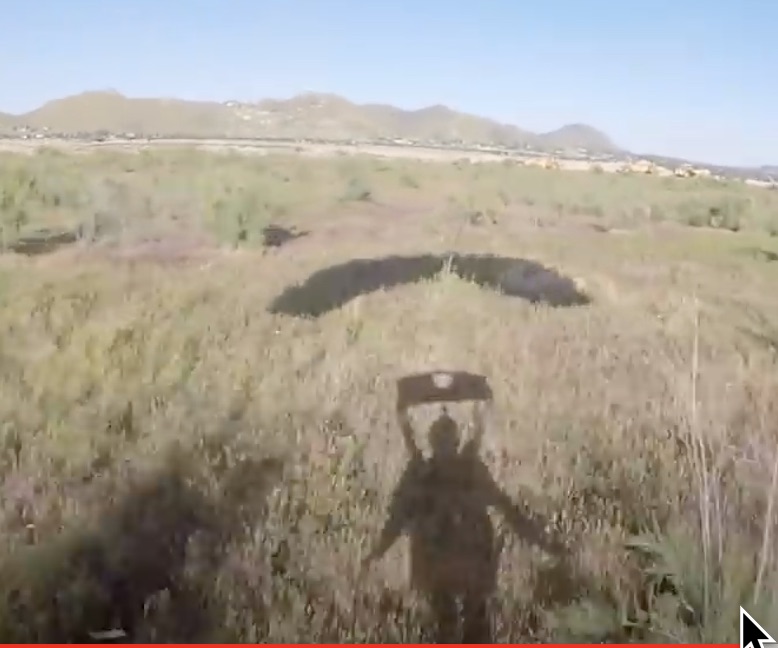
Oh, I have to count to four.  I count “Oh, please let it open, Oh, please let it open, …”  On the fourth “Please” there is a jolt, the parachute deploys.  I look up and everything is fine.  As I float down, I steer a bit by pulling on the shrouds (ominous word, I suddenly realize).  I look around, see the fields all around, the barn not far off, it’s wonderful!  Peaceful even … 

Then the ground is suddenly close, I bend my knees, fall and roll … Oh my God, it was great!

Well, the first was the best.  The next four were good too, but. I won’t carry on, complain about times the plane was stuck in the mud, or we had to wait out the low clouds or rain, saying, oh, well, better luck next week,  … It was fun, joking around as we repacked chutes, coffee, biscuits …   But then, not to be forgotten either, were the wakings up at night, when I’d find myself going repeatedly through the emergency release and reserve chute drill, before I could get to sleep again.

But I’ll tell you about my sixth jump.  It was the last, already nearly the end of summer recess, I did not go back for more.  Just six jumps. It doesn’t amount to much, and I never got to jump without the static line. Oh, well.

On that day there were quite a few people jumping, and by the time I was in line to get a parachute, there weren’t any left in my size.  But the instructor gave me a larger one, for heavier, bigger people.  He told me he would instruct the jump master to let me out later, since I would be moving much farther in the horizontal direction.  Somebody, not my usual buddy, helped to adjust the straps to fit me.

So, up we went, and I went into the open door, with my usual trepidation, moved out onto the strut below the wing.  Did the jump master take into account I should be exiting later?. He hit my leg, I jumped off backward, and as usual began to count “Please, let it …”  

On the fourth “Please”, a jolt.  Not just a jolt — the straps I guess were not well-adjusted, so the pack shot up. It knocked my helmet over my eyes, instant night.  I pushed the helmet back up, looked up, and the shrouds were tangled.  No time to think. I began to untangle them, felt myself rotating (some law of nature about action-reaction, … ) but they did come undone.  By that time, though, I was much lower.  I tugged on the shrouds to let me look around — yes, there was the barn. But it was just sinking below my horizon, far away.

In the war, an old soldier had told me, they parachuted from 800 feet, hardly high enough to slow the fall.  I’m sure I wasn’t quite that low before deploying.  But still the landing happened a bit too soon, I fell lengthwise, there was a wind that caught the canopy, and I got dragged through the corn stubble in this farm field.  Hit quick release button! — yes, sure, but contrary to all theory, it took hitting and pulling, no instant response … Got myself together, gathered up the shrouds and canopy, carried them in my arms through the field, and through the next field, and through the next … 

At the barn my faithful ruddy buddy was there.  “Where were you, what took so long?”  Then he said “You look pretty awful.”  

He said it awfully cheerfully. Actually, I realized I was feeling happy after all.  Good to have done it.  But still, it was my last jump.  

Sir Alfred Ayer

Sometime in the 1970s I was at a grand interdisciplinary conference in Florence, “Livelli di Realtà/Levels of Reality”.  This was a cultural event, and the organizer, Massimo Piattelli Palmarini — who, as he said to me later, was a ‘great snob’ — had invited luminaries from philosophy, psychology, physics, sociology. Even literature, for Italo Calvino had agreed to speak.

From America he invited Stephen Jay Gould as well as philosophers Putnam and Goodman, from France the physicist Bernard d’Espagnat and the psychiatrist André Green, from Britain the philosopher Sir Alfred Ayer

That was exciting for me. I had told my students to read Ayer, the razor-sharp critic who as a young man — some forty years ago — had brought Logical Positivism to Britain, arousing scandalized opposition.  Well, as it turned out, we were going to witness him in full critical flight.

The conference was held in the Palazzo Vecchio, which is both the town hall and the cultural center of Florence.  In a large hall we sat equipped with headphones, for there would be simultaneous translation into Italian, English, and French. There were several days of lectures, musical concerts, and a reception to be hosted by the mayor of Florence with the presence of Tuscany’s Minister of Culture.    But I want to describe just one episode, featuring our philosophical hero, Sir Alfred Ayer.

On the second day there were perhaps the most people in attendance: the psychiatrist, André Green, was to speak on the Unconscious.  You must imagine us in this great hall, all the walls hung with enormous tapestries depicting dramatic scenes from the Bible and mythology. Green was an imposing figure, and immediately drew our attention to one tapestry:

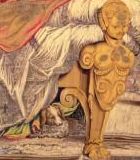
“Here we see an undressed woman on the bed.  A man, not overly dressed himself, is fleeing the bed in fright.  Why?

“Where do I, as a psychiatrist, look when I ask why?”  He lowered his pointing finger dramatically. “Under the bed!  Look closely, what do you see there?”  In fact there was, barely visible, the head of a very small dog emerging from the hanging bed covers.

That little dog did not look very threatening or sinister to me, but we were quickly to see its significance, the dark forces lying just beneath the surfaces of the mind.

As soon as Green’s lecture had ended, Ayer stood to take the word.  There was some rustling and whispering behind me.  Ayer had taken off his jacket, standing in his shirt sleeves with the suspenders, that held up his trousers, saliently displayed.

“In fact this tapestry presents the story of Joseph and Potiphar’s wife who tried to seduce him.  Why does Joseph flee?  Well, let’s suppose it is a real event.  First, Joseph sees the danger to his political ambitions, if he sleeps with his master’s wife.  Second, perhaps he does not find the woman beautiful — though the painting seems to exclude that.  And third, he might have religious scruples about adultery.  At this point, why look below the bed?

Why, when we have at least three perfectly rational explanations, should we go looking at a tiny dog below the bed?”  

André Green rose very slowly to address us (someone else had already begun an agitated retort), he rose to his full height, and when he spoke, the sarcasm was almost tangible.  

“I will let you in on a secret.  I do know the story of Joseph and Potiphar’s wife.  But I thank Sir Alfred for making this so clear for all of us.” 

The great reception was that evening, with music and the many fine wines of the region.  It was quite late when I was back a the hotel.  There, at the desk, I saw Ayer, obviously meaning to get his room key.   It did not seem to be going well.  Ayer was perhaps in a condition where communication seems totally clear and transparent, or at least, not in a condition to appreciate the obstacles.  The attendant was asking, “You are Mr. Ire?” and Ayer was repeatedly replying “No! I am Sir Alfred Ayer!”  

I moved up to the desk, a bit too intimidated to dare to say much. But I indicated to the attendant that he was right about the guest’s identity.  Sir Alfred Ayer got his room key, and we went up together in the small, ancient (but decorative) elevator, having to stand embarrassingly close to each other. As the most junior participant in the Conference I could barely expect even to be recognized. But as he went out, Sir Alfred wished me a gracious good night.

Teaching when young

In 1965, still a graduate student in Pittsburgh, I got a part-time teaching job at Point Park Junior College. I was to teach two sections of a critical thinking course. There were two textbooks, a baby logic for syllogisms and some sentential logic, the other was Language in Action. That was by S. I. Hayakawa, who would find sudden fame a couple of years later as hero of the right, by suppressing a student revolt in San Francisco.

Hayakawa had studied in the Institute for General Semantics, in Chicago. This had been founded by a Polish aristocrat emigre, Alfed Korzybski, an erstwhile intelligence officer in the Russian army — one of the few, I think, who wasn’t murdered in the 1917 Russian revolution. The principles of General Semantics were both simple and profound:

  • The map is not the territory.
  • Words are not things.
  • Words never say all about anything. 
  • The meaning of words are not in the words; they are in us. 
  • No word ever has exactly the same meaning twice. 
  • Cow1 is not Cow2. 

I tried to tell the Dean that among logicians, Korzybski and General Semantics were never mentioned in polite company. But the books had been ordered by the other logic teacher, so that was that. (Or maybe not: one of Korzybski’s slogans was “This is not that”.)

The evening section of the course was for mature students, who typically came in after work. Coming into the room I could feel the interest and goodwill all around. Right in front, in the first row, was a stocky, short man with well-combed black hair and a look and smile on his face that said “I am going to be a fan!” This was a two-hour session with a break and I used the first half getting them to introduce themselves and talk about what we would do. The look was clearly changing to “I am a fan!”

After the break I wrote a syllogism on the board, saying “Let’s discuss what is a valid argument.” I turned around, and looked at my fan. A look of utter and total incomprehension had now come over his face. Undaunted, I told myself that this man was ready to be taught. Little did I realize that this look would never leave his face, not in any single session, not even for a single moment …

The other course section was during the day for the full-time students. Most of these, I soon came to know, did not want to be there. I entered the room, and there they were, all 124 of them, row upon row. I stepped up the platform to the microphone. Introducing myself I was painfully aware of my still very Dutch accent, and worried that I might be sounding too academic. I put up my first slide — optical slide projector, does any one remember them, changing one page at a time? It didn’t focus, so I started moving the projector stand. After a bit of struggle, a more shoving, and adjusting, a student called out “Try turning the knob!”

I suppose I lost their respect that very first day. I certainly did not gain it back a couple of weeks later when we had an example of a politician’s stump speech. “You know very well”, I said, “that it is no qualification for an office to score a home run in some football game”. The whole class was laughing, it took me a hesitant few seconds to realize why … wrong game? oh well …

Looking out over the class I could see that the rows were ordered by size: the back was full of huge lumpy guys with attitude. They were noisy, laughing too loud, passing remarks … I tried to joke a bit with them, no use … One day I stepped down from the platform. Everyone became quiet, I walked down the long center isle to the back rows. There I stopped, I faced one of those louts, pointed at his chest: “Out!” He could probably have smashed me with his thumb, like Sean Connery in Presidio. But he walked out. The respite did not last, though.

After I graduated I got to teach much better logic classes, and it became more of a pleasure, though I stayed quite apprehensive for some years. The logic I knew. But teaching skills weren’t taught, you had to learn those by trial and error. The logic texts were clear, but they needed to be livened up with examples, by drawing out the students’ comments, by putting on a bit of an act.

I remember, with some misgiving still, how I kept asking myself once, when preparing a class, would I be up to it? I wanted to bring them a long example to keep the course cool and funky. Trouble was, I was still subject to awkward moments of self-consciousness, even embarrassment, blushing, faltering at the wrong times — and this example would skirt some of teaching’s unstated limits … But I went ahead.

The principle of Reductio ad Absurdum is controversial, I told them. Intuitionists think its strongest version is just a fallacy. But even they agree that if something absurd follows from a premise, then the premise is false. I want to tell you the story of a famous Reductio argument in the Middle Ages.

(As I said this, I noticed that my hand still holding the chalk was trembling.)

Especially around the year 1000 AD there was great anxiety about the possible advent of the AntiChrist, as prophesied in the Johannine Epistles. Much speculation about how this could come about focused on witches: witches were in league with the devil, consorted with demons in the black Sabbath rituals, lay with demons, had carnal knowledge of demons … so, a baby could be born of such a union!

These were the days of scholastic disputation, and the first argument was that this was not possible: there could not be offspring of two distinct kinds of being, not even of horse and ox, let alone of human and demon.

But counterargument: demons have no specific sex. Hence the same demon can appear as succubus to a warlock and as incubus to a witch. Thus the demon could collect the man’s seed from the warlock and deposit it when consorting with a witch as incubus.

(Now my knees had a slight quiver … my mouth was becoming dry …)

The counter-counter argument followed swiftly. By the witches’ own testimony the demon’s organ was far colder than ice, the seed could not survive!

And was refuted: demons are not limited by space and time. A demon could disappear in one place and materialize in another at the very same instant — no time for the seed to freeze.

( I realized that I was licking my dry lips. I was suddenly afraid that it might signal a sensuous, prurient interest in the subject …)

But in the 12th century, a monk came up with the final refutation:

Suppose per absurdum that a child were born of such a union. The demon would not be the father since it would not be his seed. The warlock would not be the father since he did not have carnal knowledge of the witch. So this would be a child without a father, which is absurd, and therefore cannot exist.

(These last few words I almost did not manage to utter, my dry mouth could hardly form the words, my face felt too hot, I did not know where to look …)

Some students were laughing a bit self-consciously. One was frowning hard. Some, I think, had not been able to follow the argument.

But they had certainly heard the words ….

The Great Eclipse of 1979

The Great Solar Eclipse of February 26, 1979 was going to be spectacularly visible in Bozeman, Montana, so the university there decided on a great celebratory event that would bring together scholars, artists, physicist, poets, writers, musicians … This was organized by Michael and Lynda Sexton, in English and Philosophy respectively — I was going to know them well afterward, because they involved me in their fabulous magazine Corona.
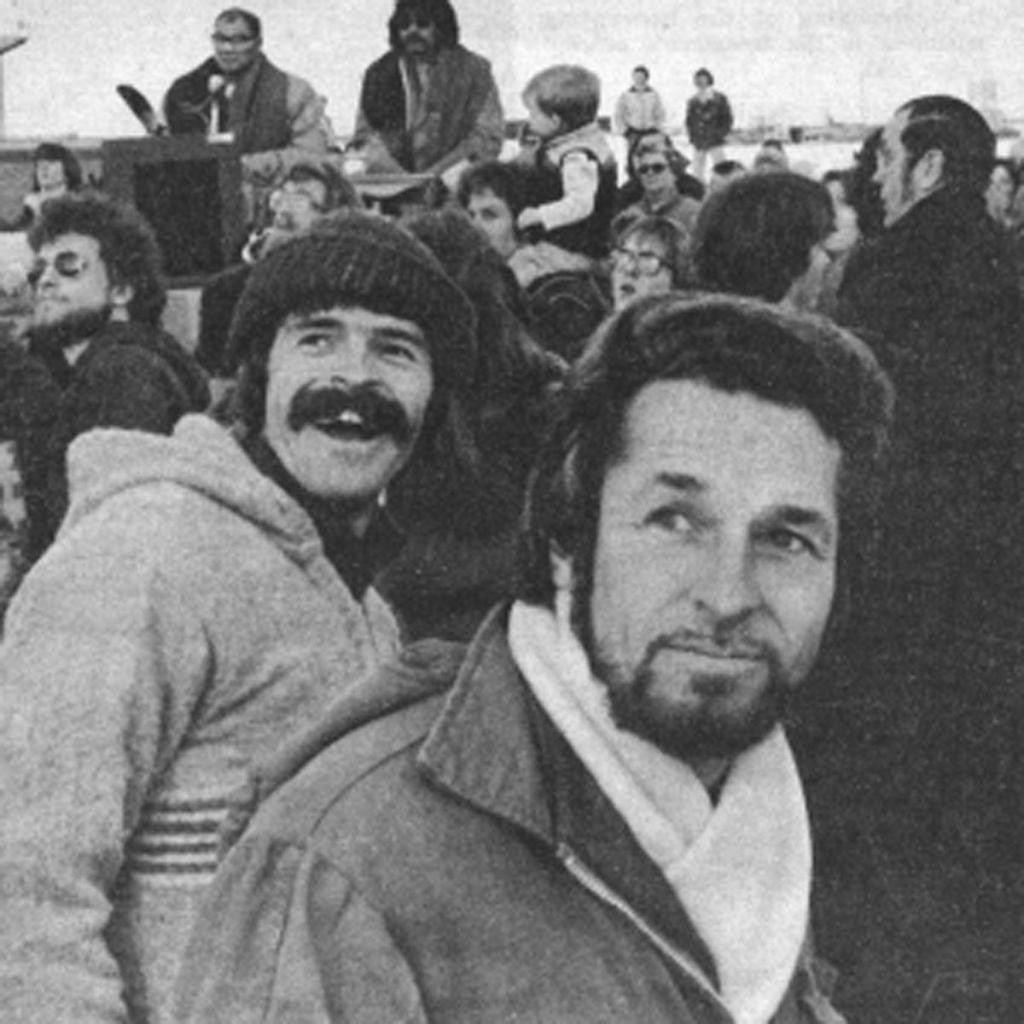
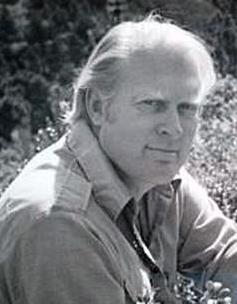
My friend Clark Glamour was an alumnus of that university. I feel sure that it was due to him that I was invited, together with him, to represent philosophy of science for the occasion.

At that time I was teaching spring semesters at USC in Los Angeles. So I flew to Salt Lake City, where I was to catch a second plane, to Bozeman. But SLC seemed to be as far as I was going to get: due to high wind or some other such atmospheric disturbance all flights were canceled.

I called my contact at the university, and was told that yes, they knew; there were four of us in the same predicament. They were sending a plane to collect us, our names would be called in the airport, but it might be a while.

So I went to the bar, which was as good as empty, except that Clark Glymour was already there. He told me that there was something puzzling going on, he’d asked for a bourbon, and the waitress had just brought him some water and ice. At this point someone else wandered in, looking lost. I said to Clark, you know there are four of us …. Clark waved at him, and after a slight hesitation he came over. “Ted Flicker”, he said, “are you the others going up to Montana?”

So there we were three and Flicker knew just what to do to get a drink in Mormon territory. The waitress would bring you the mix, which cost as much as a drink in any airport. Then you had to go a window next door and buy a very cheap, small, one-drink size, bottle of alcohol. If you were a Mormon you would skip that part.

Ted told us that he was a movie and TV director, in fact the director of Barney. Said in a way that invited instant recognition. It had been almost ten years since I had watched TV, I thought that perhaps it was about a dog? I didn’t say that, just in case, looked at Clark who was also non-plussed, then back at Ted. Barney Miller, he said, you must know it, smash-hit … He gave us rather an odd look.

“You must be the other three.” A tall man, slight Teutonic accent, looking quizzically at us. “Hi, I’m Frithof Capra.” Well, his name I knew. The Tao of Physics was a best seller among the Los Angeles students, and I think by that time probably already a best-seller world-wide. “Do you all know why we are stuck here, why they need to send a plane for us?” Clark — my God, did he realize who this was?? — just said dryly “The commercial airlines won’t fly in this weather.” I hadn’t actually read the book, any more than I had watched Barney Miller. But the students might be right about him after all, a Renaissance man, a physicist-mystic, adept of oriental mysteries and high energy physics …

We had some hours in the bar, and some less comfortable hours in the small plane, so we started telling each other our stories. What were we going to do in Bozeman? I was going to give a talk on eclipses in Aristotle’s theory of science. Clark was going to regret that what everybody think they know about eclipses is just what they are in Copernicus’ model, while things are so much more interesting in General Relativity and its cosmology.

These pedestrian topics paled in comparison to our friends’. Ted Flicker’s talk would be “Hollywood as the Black Hole of the Universe”. He told us hair raising stories about the life of an actor-director-producer. One day you are the king, all the scripts are landing on your desk, your agent has you in a million dollar house in Beverley Hills. The next morning he is telling you sell or mortgage it all, the assets have gone into a sink hole together with your reputation — you were living on credit and credit is no more. In the long run though he was going to win big.

(And in fact I think he did, I looked him up later, and realized I should have been more impressed.)

Frithof was at first not as forthcoming, but I was sitting next to him on the plane, and he started talking. I gave myself one year to write a best-seller, he said. All those physics gigs had been little more than lab assistant work, the credit and the plaudits all went to whose lab it was. Before that I had the idea that a gambling scheme, based on a physics-level statistical model would get me out of it. It would work. But even in a simulation it would take years to win enough, always supposing that you’d be able t cover occasional big losses. So, I chose the two things that were most fascinating to lots of people I knew, physics and mysticism, and put them together. It worked.

Looking back to this now, I’m certainly not saying this was true. Possibly, and perhaps even likely, Frithof was taking the mickey (as they say), Someone as naive as I must have looked to him, well, it would be easy to have a little fun at my expense. He gave a great talk the next day, about alternative science, acupuncture and shiatsu, the healing power of spirituality, to a standing ovation at the end. This was the dawning of the Age of Aquarius!

But even that talk, I wonder whether it is remembered by the people who were there.

For what followed was more magical than what could be in any words. When the eclipse was going to happen huge numbers of people came to the university campus to watch it together. It was cloudy, it was getting cloudier, and darker, We all had our dark lenses or smoke-darkened glass, but our mood was darkening too. It was going to pass us by …

Then a Cheyenne native American preacher took the podium and began to chant a prayer. The clouds thinned.

The sun appeared as a black disk surrounded by glory, a rim of light.

(From local newspaper, which I saved)

Meeting Michael Scriven

In the fall of 1965 I was writing my dissertation and applying for jobs. The universities were expanding and we were giving job talks all over the place. One of mine was at Indiana University.

When I arrived a tall, handsome blond man took charge of me. “Hi, I’m Michael Scriven, I’m to be your host. Your talk isn’t till tomorrow, and we have nothing on till dinner. So let’s go to my house for a bit.”

Michael Scriven … of course I was in awe! We all learned about him, he had singlehandedly demolished the Hempel-Oppenheim theory of explanation with his clever counter-examples. And there were rumors about him, wasn’t he rich, a man of the world?
“First of all”, he said, “we have to go pick up my car from the mechanic”. Not some serious repair, I hope? “No, not at all, he is replacing the headlights. The new halogen lights aren’t available here yet, but I had some imported from Europe, he’s putting them in”. So we went there and got into his very large Cadillac with its new lights, On the way out of town he began to tell me about the house, which he had contracted and designed himself.

“First of all a friend flew me over the area to do some aerial photography, then I went to the land office to find out who owned the hills that looked attractive in the photos. You’ll see, the house has a good view over the valley”.

Coming through the gate we wended our way through the peacocks. (“I used to have an ocelot”, he said, “but the farmers claimed he was worrying their animals, totally untrue. I had to give it to a zoo”.) Just before the door was a huge hanging mobile (Alexander Calder, he told me) and we entered the kitchen. Poor cat, must be hungry — Michael went to something like a small oven (“Got this recently, but in the end I’m only using to warm the catfood”). I had no idea what it was; later, when I became less ignorant, I realized it must have been an early microwave.

We toured the house, which was built into the hill, so we had come in on the second floor. The floor below had the master suite and his office, looking out over the valley. There were still rather a lot of leaves on the trees (“The view is magnificent in the winter!”) and the office would have been rather dark if it weren’t for lighting that seemed to come from every direction in the room. We went back upstairs, and arranged ourselves in a conversation area, with sherry and nuts (“Do you like macadamia nuts?” — only God, as far as I knew, would know what they were, but I was very appreciative.)

“But wait! Before you tell me all about your philosophy, have you ever heard a four-thousand dollar Hi-Fi turned way up high?” No, Michael, that would be amazing … I was volubly admiring it as soon as he turned it off and we could speak again … And we talked. In fact, Michael could be a good listener. I began to relax.

“Some more sherry?” As he spoke, as it was getting dark now, the lights turned on automatically. He looked up.

And I didn’t say a word.

Unlikely Places

Like most male animals I have often peed in unlikely places. On trees, in the bushes, behind houses; once in a decorative vase, when slightly drunk, in a house where I couldn’t find the bathroom. 

But the one time I am thinking about was memorable, not because of where the pee ended up, but for other reasons.

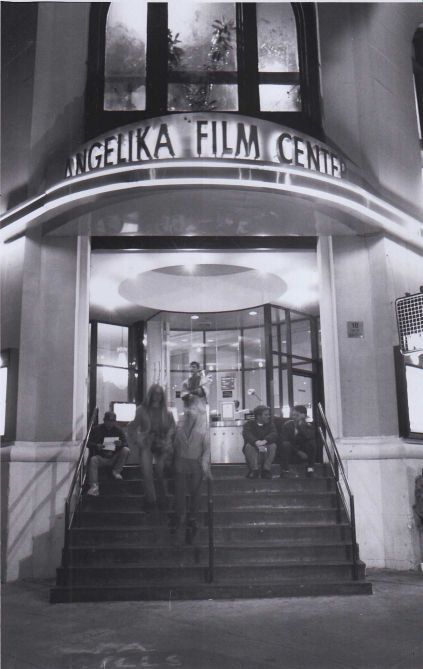
This was in New York, I was going with a friend to an art movie theater, the Angelika, in Greenwich Village. I wanted rather to impress her but it was not going very well. I was just speaking about how lucky we were, so healthy, in life and limb, not even having to wear glasses. 

What are you talking about, she said. I wear glasses, I wear them all the time. She took me by the shoulders and said, Do not turn around. Tell me what color are my eyes. 

They are fascinating eyes, I said, exactly why I never even see your glasses, I cannot take my eyes of your eyes. Fine, she said, but what color are they? Amber with a touch of gold, I said. She let me go, looking sadly at me with her clear blue eyes. 

I was not defensive about this, I was quite used to owning up to all the shortcomings detected in me. I just have to own up, I said, to being an academic, a nerd, quite absentminded and not very observant, almost like an immaterial intellect hovering above the material world. By this time we had taken our seats in the theater but I suddenly realized that I could not just sit there for two hours. I’ll be back in a moment, I said, I have to go to the bathroom. 

On my way down I remembered a passage in a novel by Romain Gary. Two middle-aged men are at the urinal and one says, by a certain age, no matter what you do, the last drip is going to go down your pants. This I just did not want to happen this particular evening. So I determined go immediately into a stall, where there would be toilet paper to use. I rushed in, and I entered the first stall. 

Everything was fine, but I started noticing some movement and noise in the next stall, and became convinced that there were two people in it. Well, this was New York, and if a couple of gay friends needed some privacy ….. But then when they raised their voices I became convinced that they were women, speaking a language I didn’t know. Oh well! Tourists in New York, I thought. Don’t know the language very well, naive small-town people, always getting lost here. And there they are in a men’s bathroom. 

By this time it seemed a lot of people had come in, I suppose a movie had just let out. I left the stall, going at once to the sink to wash my hands, and then noticed something from the corner of my eye. There was a long line of women waiting for the next stall to open. I suppose I could have come up with more auxiliary hypotheses. But I just quietly washed my hands and walked out under the tolerant, slightly speculative eyes of all those women.